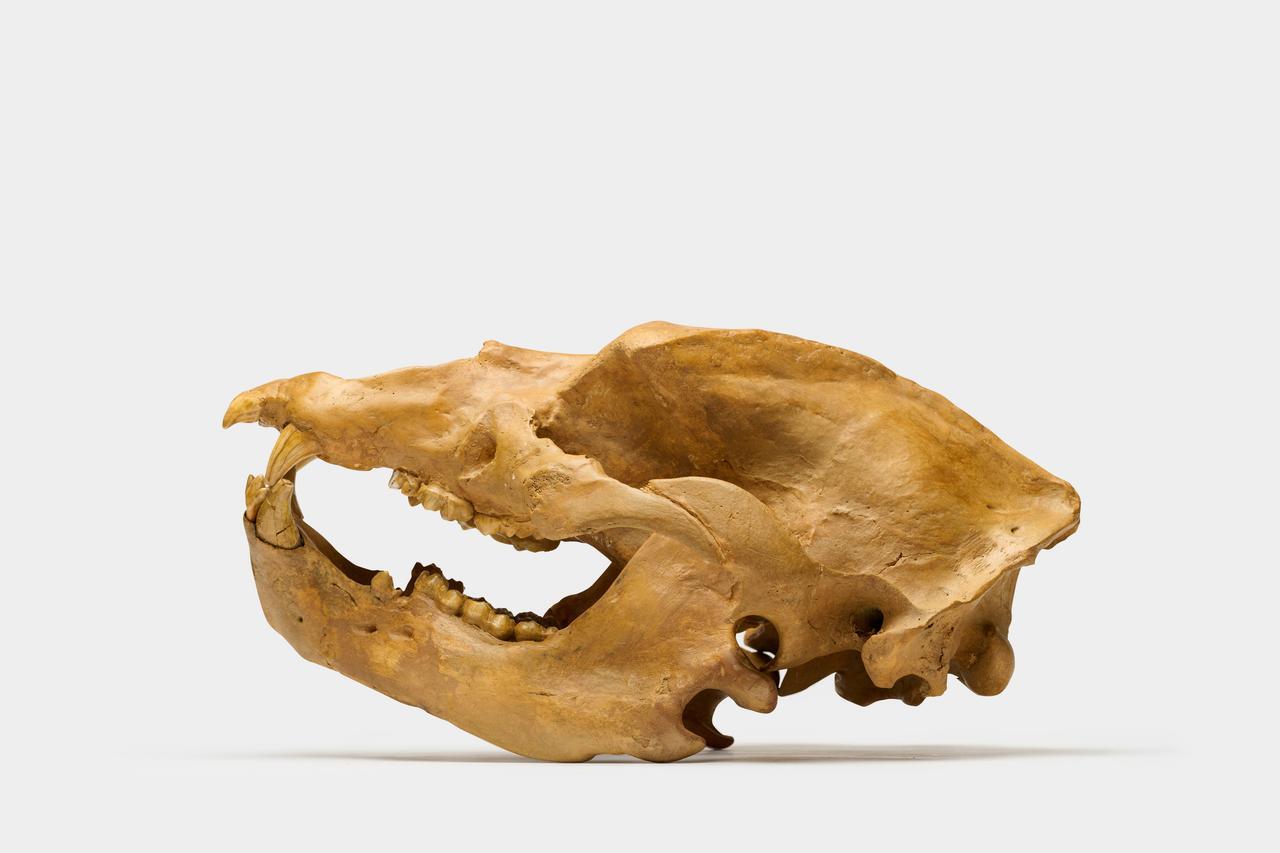
Rare complete rudist - Fossilised shell - Caprina distefanoi


Catawiki Buyer Protection
Your payment’s safe with us until you receive your object.View details
Trustpilot 4.4 | 127726 reviews
Rated Excellent on Trustpilot.
Caprina distefanoi, a rare complete rudist specimen from Europe, dating to the Late Cretaceous (about 100.5–66 million years ago), natural condition on matrix, measuring 18 by 12 cm with both valves not glued and a plastic stand included.
Description from the seller
Uncommon Fossil Bivalve, 100 million years old, Caprina distefanoi, on matrix.
This specimen is very beautiful with a funny question mark shape, looks like marble sculpture.
18 x 12 cm.
Rudists are a group of extinct box-, tube- or ring-shaped marine heterodont bivalves belonging to the order Hippuritida that arose during the Late Jurassic and became so diverse during the Cretaceous that they were major reef-building organisms in the Tethys Ocean, until their complete extinction at the close of the Cretaceous.
Although they have been very abundant organisms, it is very difficult to find whole and well preserved ones, due to many reasons, such as the hardness of the rock that contains them, very compact and hard, almost like marble.
Can be displayed in two ways.
Rare, unseen, complete specimen from a closed site.
From an old collection.
Not glued, both valves.
Plastic stand included.
Rare
Seller's Story
Uncommon Fossil Bivalve, 100 million years old, Caprina distefanoi, on matrix.
This specimen is very beautiful with a funny question mark shape, looks like marble sculpture.
18 x 12 cm.
Rudists are a group of extinct box-, tube- or ring-shaped marine heterodont bivalves belonging to the order Hippuritida that arose during the Late Jurassic and became so diverse during the Cretaceous that they were major reef-building organisms in the Tethys Ocean, until their complete extinction at the close of the Cretaceous.
Although they have been very abundant organisms, it is very difficult to find whole and well preserved ones, due to many reasons, such as the hardness of the rock that contains them, very compact and hard, almost like marble.
Can be displayed in two ways.
Rare, unseen, complete specimen from a closed site.
From an old collection.
Not glued, both valves.
Plastic stand included.
Rare