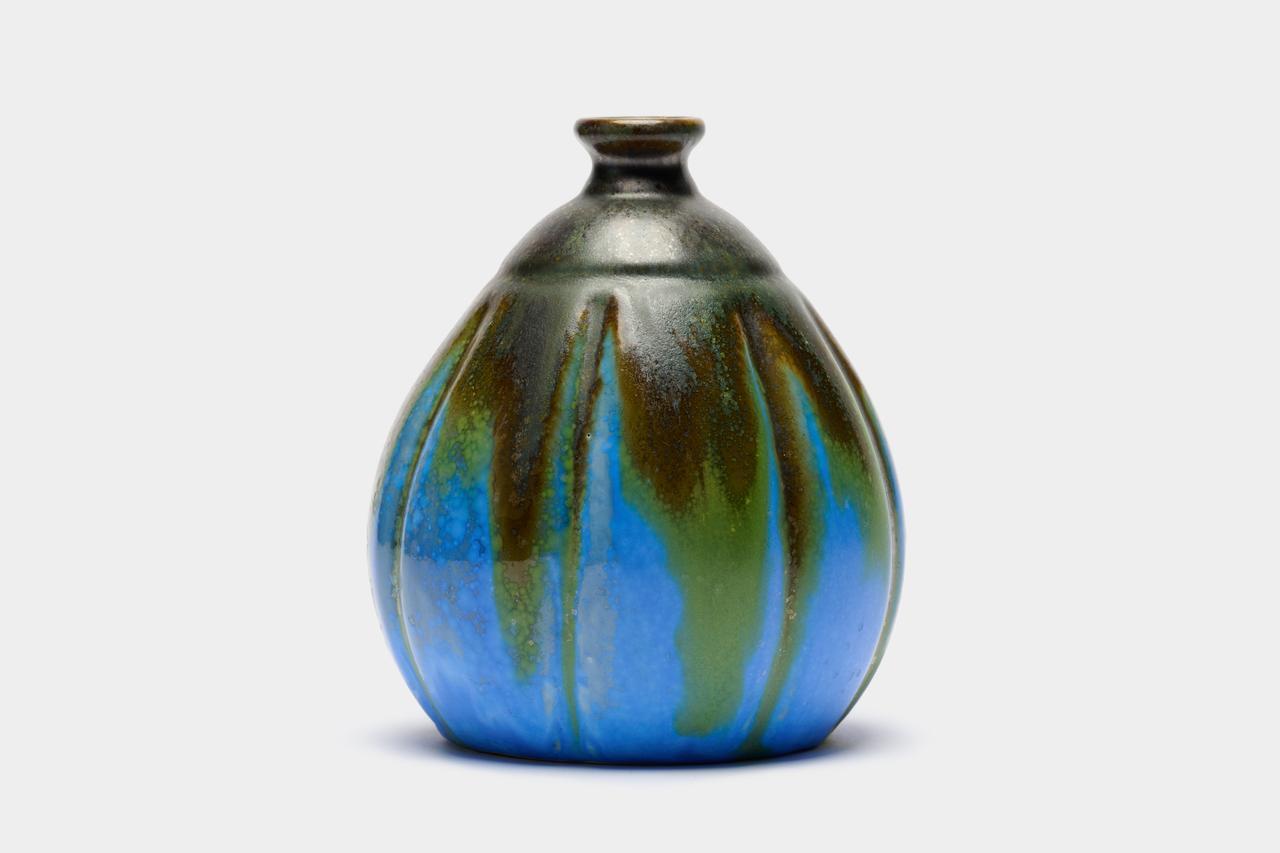
Emile Gallé - Vase - Glass


Art historian with extensive experience working at various auction houses in antiques.
| €2 | ||
|---|---|---|
| €1 |
Catawiki Buyer Protection
Your payment’s safe with us until you receive your object.View details
Trustpilot 4.4 | 128856 reviews
Rated Excellent on Trustpilot.
Art Deco glass piece by Émile Gallé from Nancy, France, dating to circa 1900–1910; dimensions 6.5 cm wide, 12.5 cm high, depth 1 cm, diameter 1 cm, weight 170 g, in good used condition with minor signs of age.
Description from the seller
Émile Gallé (born May 4, 1846 in Nancy, died September 23, 1904 there) – a French designer primarily creating glass works (e.g., vases), furniture designs, and jewelry in the Art Nouveau style, an initiator and leading representative of the Nancy School. He initially studied philosophy and botany, although he also produced designs for a ceramics factory owned by his father. In 1874 he settled in Nancy and established a glassworks there, and in 1883 he began producing furniture[1].
His father ran a ceramic and glass workshop, which allowed Émile to become acquainted with these techniques. He was especially interested in nature, particularly plants. He collected and cultivated them, drawing inspiration from them for his works. In the early phase he drew on ancient and medieval glasses, producing transparent or slightly colored wares. In the mature phase of his career, besides the world of plants, the Rococo style, symbolism, and Japanese art influenced his art. He developed his own original style based on grinding or acid-etching colored glass; the decorations obtained in this way were based on botanical and animal motifs and also referred to the world of insects and marine creatures. He also used the technique of layered glass (colored or colorless glass covered with a layer of glass in another color, in which notches were made to reveal the bottom layer) and embedding elements of metal and other materials into the glass. He created new vessel forms that often resembled flower chalices. Thanks to his own methods of coloring glass, he achieved a wide range of colors, using mainly milky and matte hues.
Émile Gallé (born May 4, 1846 in Nancy, died September 23, 1904 there) – a French designer primarily creating glass works (e.g., vases), furniture designs, and jewelry in the Art Nouveau style, an initiator and leading representative of the Nancy School. He initially studied philosophy and botany, although he also produced designs for a ceramics factory owned by his father. In 1874 he settled in Nancy and established a glassworks there, and in 1883 he began producing furniture[1].
His father ran a ceramic and glass workshop, which allowed Émile to become acquainted with these techniques. He was especially interested in nature, particularly plants. He collected and cultivated them, drawing inspiration from them for his works. In the early phase he drew on ancient and medieval glasses, producing transparent or slightly colored wares. In the mature phase of his career, besides the world of plants, the Rococo style, symbolism, and Japanese art influenced his art. He developed his own original style based on grinding or acid-etching colored glass; the decorations obtained in this way were based on botanical and animal motifs and also referred to the world of insects and marine creatures. He also used the technique of layered glass (colored or colorless glass covered with a layer of glass in another color, in which notches were made to reveal the bottom layer) and embedding elements of metal and other materials into the glass. He created new vessel forms that often resembled flower chalices. Thanks to his own methods of coloring glass, he achieved a wide range of colors, using mainly milky and matte hues.