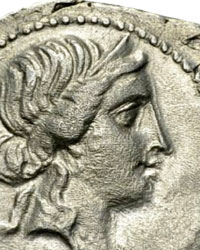
Byzantine Empire. Heraclius (AD 610-641). Solidus Constantinopolis

02
days
22
hours
26
minutes
30
seconds
Current bid
€ 650
Reserve price met
Carmen Vera Gutiérrez
Expert
Selected by Carmen Vera Gutiérrez

Experienced antique appraiser specialising in Spanish coins with deep knowledge of ancient currency.

Estimate  € 650 - € 800
21 other people are watching this object
BGBidder 0360
€650
BEBidder 4770
€600
ESBidder 5836
€550

Catawiki Buyer Protection

Your payment’s safe with us until you receive your object.View details

Trustpilot 4.4 | 129291 reviews

Rated Excellent on Trustpilot.

AV solidus of Heraclius, dated 638/639, Constantinople, Officina 8, weight 4.38 g, depicting Heraclius with Heraclius Constantinus and Heraclonas, not certified.

AI-assisted summary

Description from the seller

Solidus of Heraclius, 610-641, with Heraclius Constantinus and Heraclonas. AV solidus, 638/639, Constantinople, 8th officina; 4.38 g. Three emperors standing face to face // cross on steps. DOC 41 h; Sear 767.

Emperor Heraclius ruled from 613 together with his son from the first marriage, Heraclius Constantinus (Constans III). Heraclonas, his son from the second marriage with Martina, was from 632 as Caesar and from 638 also as Augustus, and thus a member of the imperial college as well. After Heraclius’ death on February 11, 641, his sons were to rule the Byzantine Empire jointly with equal rights. According to ancient tradition, Empress widow Martina is said to have tried to enforce the claim of her son Heraclonas against his half-brother. Shortly after the death of Constantinus III on May 25, 641, Heraclonas, under public pressure, made his son Flavius Heraclius (Constans II) co-ruler. Rumors of an alleged poisoning of Constantinus III, as well as the revived Monotheletism, a Christian doctrine that attributed two natures to Jesus but only one will, led to unrest. Martina and Heraclonas were subsequently mutilated and banished to Rhodes during a palace coup. Constans II then took sole rule over the empire.

The dynastic imagery of Heraclius with all three rulers presents them in the protocollary display scheme that corresponded to the appearance of the imperial family at important public ceremonies. The position of the senior emperor in the center, his older co-regent to the right, and his much smaller co-emperor to the left is underscored by the relative sizes. Coins of our type show the younger Heraclonas already also with a cross diadem, thus crowned as Augustus on the same level of rule as his brother. The complete omission of any ruler’s name in the obverse legend further emphasizes the dynastic concept.

Solidus of Heraclius, 610-641, with Heraclius Constantinus and Heraclonas. AV solidus, 638/639, Constantinople, 8th officina; 4.38 g. Three emperors standing face to face // cross on steps. DOC 41 h; Sear 767.

Emperor Heraclius ruled from 613 together with his son from the first marriage, Heraclius Constantinus (Constans III). Heraclonas, his son from the second marriage with Martina, was from 632 as Caesar and from 638 also as Augustus, and thus a member of the imperial college as well. After Heraclius’ death on February 11, 641, his sons were to rule the Byzantine Empire jointly with equal rights. According to ancient tradition, Empress widow Martina is said to have tried to enforce the claim of her son Heraclonas against his half-brother. Shortly after the death of Constantinus III on May 25, 641, Heraclonas, under public pressure, made his son Flavius Heraclius (Constans II) co-ruler. Rumors of an alleged poisoning of Constantinus III, as well as the revived Monotheletism, a Christian doctrine that attributed two natures to Jesus but only one will, led to unrest. Martina and Heraclonas were subsequently mutilated and banished to Rhodes during a palace coup. Constans II then took sole rule over the empire.

The dynastic imagery of Heraclius with all three rulers presents them in the protocollary display scheme that corresponded to the appearance of the imperial family at important public ceremonies. The position of the senior emperor in the center, his older co-regent to the right, and his much smaller co-emperor to the left is underscored by the relative sizes. Coins of our type show the younger Heraclonas already also with a cross diadem, thus crowned as Augustus on the same level of rule as his brother. The complete omission of any ruler’s name in the obverse legend further emphasizes the dynastic concept.

Details

Era
Before 1400
Culture/region
Byzantine Empire
Year/period and variation
Constantinopolis
Ruler
Heraclius (AD 610-641)
Denomination
Solidus
Metal
AV
Condition
Ungraded
Weight
1 g
Number of objects
1
GermanyVerified
New
on Catawiki
Private

Similar objects

For you in

Ancient Coins