No. 103557076
No. 103557076
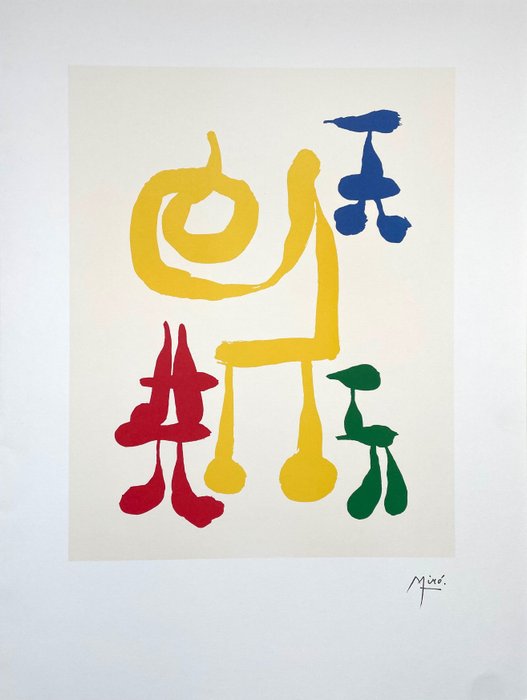
Litografía de Joan Miró (*)
Esta obra reproduce una de las ilustraciones creadas originalmente por Miró para ilustrar el libro de poemas “Parler Seul” (**) (Hablar solo), escrito por Tristan Tzara en 1947.
Editada por Maeght Editeur en el año 2004.
Realizada sobre papel Vellum de algodón de alto gramaje.
Firmada en plancha.
Sello de la editora y de la Sucesión Miró en el verso de la hoja.
Incluye Certificado de Autenticidad (COA).
Especificaciones:
- Dimensiones soporte: 60 x 45 cm
- Dimensiones imagen: 42 x 33 cm
- Año 2004
- Edición: 1000ex.
- Referencias: Cramer 17. Rauch 165
- Estado: Excelente (esta obra nunca ha sido enmarcada ni expuesta, y siempre conservada en carpeta profesional de arte, por lo que se conserva en perfecto estado).
La obra será cuidadosamente manipulada y empaquetada en paquete de cartón plano reforzado. El envío será certificado con número de seguimiento.
El envío incluirá además seguro completo por el valor final de la obra con reembolso completo en caso de pérdida o daño, sin coste alguno para el comprador.
(*) Joan Miró (1893-1983) nació en Barcelona, donde creció y comenzó sus estudios artísticos. Fue a la academia La Llotja en contra de la voluntad de sus padres, que querían que él trabajara de una manera más tradicional. Más tarde estudió en la Escola d'Art de Francesc Galí y conoció a los fauves y los cubistas.
Sus paisajes emocionales, los que lo formarán como persona y artista, son esencialmente Mont-roig, París, Mallorca y más adelante Nueva York y Japón. Mont-roig, una pequeña población de la comarca del Baix Camp, será el contrapunto a la agitación intelectual que vive en París, donde se mudó en los años veinte junto a los poetas surrealistas y los artistas más creativos de su tiempo. Allí Llegó a conocer a Arp, Magritte, Brancusi y Giacometti y expuso junto con Dalí, Tanguy, Meret Oppenheim y Max Ernst en varias exposiciones sobre Dadaísmo y Surrealismo.
Ell estímulo del expresionismo abstracto lo descubre en Nueva York en los años cuarenta. Más tarde, en 1956, en plena Segunda Guerra Mundial, Joan Miró abandonará su exilio en Francia y se instalará en Palma de Mallorca, espacio de refugio y de trabajo, donde su amigo Josep Lluís Sert diseñará el taller que siempre había soñado. Allí se centró en el trabajo de esculturas y cerámicas, hasta su muerte en 1983.
El arraigo al paisaje de Mont-roig primero y al de Mallorca después será determinante en su obra. El vínculo con la tierra y el interés por los objetos cotidianos y por el entorno natural serán el trasfondo de algunas de sus investigaciones técnicas y formales. Miró huye del academicismo, a la búsqueda constante de una obra global y pura, no adscrita a ningún movimiento determinado. Contenido en las formas y en las manifestaciones públicas, es a través del hecho plástico donde Joan Miró muestra su rebeldía y una gran sensibilidad por los acontecimientos políticos y sociales que lo rodean. Este contraste de fuerzas le llevará a crear un lenguaje único y personalísimo que lo sitúa como uno de los artistas más influyentes del siglo XX.
(**) “Parler Seul” representa una colaboración particularmente eficaz entre artista y autor. Las imágenes brillantemente espontáneas y amorfas de Miró, dibujadas directamente en la piedra con muy pocos bocetos preparatorios, tienen el brío inventivo de los versos aleatorios de Tzara.
La edición original fue a cargo Maeght Editeur y consta de 72 litografías originales de Miró, 49 de ellas en color, de las cuales 18 son hors-texte. (*) Joan Miró (1893-1983) nació en Barcelona, donde creció y comenzó sus estudios artísticos. Fue a la academia La Llotja en contra de la voluntad de sus padres, que querían que él trabajara de una manera más tradicional. Más tarde estudió en la Escola d'Art de Francesc Galí y conoció a los fauves y los cubistas.
Sus paisajes emocionales, los que lo formarán como persona y artista, son esencialmente Mont-roig, París, Mallorca y más adelante Nueva York y Japón. Mont-roig, una pequeña población de la comarca del Baix Camp, será el contrapunto a la agitación intelectual que vive en París, donde se mudó en los años veinte junto a los poetas surrealistas y los artistas más creativos de su tiempo. Allí Llegó a conocer a Arp, Magritte, Brancusi y Giacometti y expuso junto con Dalí, Tanguy, Meret Oppenheim y Max Ernst en varias exposiciones sobre Dadaísmo y Surrealismo.
Ell estímulo del expresionismo abstracto lo descubre en Nueva York en los años cuarenta. Más tarde, en 1956, en plena Segunda Guerra Mundial, Joan Miró abandonará su exilio en Francia y se instalará en Palma de Mallorca, espacio de refugio y de trabajo, donde su amigo Josep Lluís Sert diseñará el taller que siempre había soñado. Allí se centró en el trabajo de esculturas y cerámicas, hasta su muerte en 1983.
El arraigo al paisaje de Mont-roig primero y al de Mallorca después será determinante en su obra. El vínculo con la tierra y el interés por los objetos cotidianos y por el entorno natural serán el trasfondo de algunas de sus investigaciones técnicas y formales. Miró huye del academicismo, a la búsqueda constante de una obra global y pura, no adscrita a ningún movimiento determinado. Contenido en las formas y en las manifestaciones públicas, es a través del hecho plástico donde Joan Miró muestra su rebeldía y una gran sensibilidad por los acontecimientos políticos y sociales que lo rodean. Este contraste de fuerzas le llevará a crear un lenguaje único y personalísimo que lo sitúa como uno de los artistas más influyentes del siglo XX.
(**) “Parler Seul” representa una colaboración particularmente eficaz entre artista y autor. Las imágenes brillantemente espontáneas y amorfas de Miró, dibujadas directamente en la piedra con muy pocos bocetos preparatorios, tienen el brío inventivo de los versos aleatorios de Tzara.
La edición original fue a cargo Maeght Editeur y consta de 72 litografías originales de Miró, 49 de ellas en color, de las cuales 18 son hors-texte. .
Tags:
Picasso, Dalí, Pollock, Miró, Beuys, Warhol, Giacometti, Hodgkin, Moore, Malevich, Mondrian, O’Keefe, Matisse, Kandinsky, Bacon, Klimt, Hooper, Rothko, Chirico, Duchamp, Chagall, Braque, Picabia, Kooning, Ernst, Paul Klee, Modigliani, Calder, Delaunay.
Kiefer, Kusama, Murakami, Koons, Basquiat, Nauman, Sherman, Bourgeois, Polke, Ruff, Ruscha, Holzer, Abramović, Freud, Mendieta, Tuymans, Kruger, Hockney, Saville, Fanzhi, Oehlen, Richter, Scully, Stella, Schütte, Xiaodong, Judd, Peyton, Richard Serra, LeWitt, Kippenberger, Baldessari, Doig, González-Torres, Salvador Dalí, Joan Miró, Magritte, Max Ernst, Leonora Carrington, Dorothea Tanning, Roberto Matta, Man Ray, Varo, Oppenheim, Key Sage, André Masson, Paul Delvaux, Giorgio de Chirico, Marcel Duchamp, Marc Chagall, Paul Klee, Hans Bellmer, Zhang Xiaogang, Savinio, Alexander Calder, Dora Maar Vitra, Poolsen, Jacobsen, Hans Wegner, Charles Eames, Perriand, Philippe Starck, Marcel Breuer, Knoll, Juhl, Verner Panton, Le Corbusier, Mies Vander Rohe, Nelson, Mogensen, Eames, Gio Ponti, Knoll, Isamu Noguchi, Bertoia, Aalto, Urquiola, Eileen Gray, Pesce, Magistretti. Louis Vuitton, Gucci, Chanel, Burberry, Hermès, Prada, Dior, Armani, Cartier, Dolce & Gabbana, Versace, Balenciaga, Ralph Lauren, Rolex, Fendi, Givenchy, Tiffany, Alexander McQueen, Yves Saint Laurent, Valentino, Bvlgari. Adami Alberti Alcaraz Alfaro Baldaccini Baldeweg Barceló Barjola Canogar Cabellut Caruncho Ceesepe Chillida Chirino Clavé Condé Cruz-Díez Dalí Dokoupil Equipo Crónica Gudmundur Feito Genovés Goya Gordillo Guinovart Hernández Pijuan Iglesias Lacalle Joan Miró Misterpiro Mompó Palazuelo Pérez-Villalta Picasso Plensa Rafols-Casamada Reche Redondela Saura Soto Sicilia Tàpies Teixidor Quetglas Úrculo Uslé Varela Valdés Villalba Yturralde
How to buy on Catawiki
1. Discover something special
2. Place the top bid
3. Make a secure payment