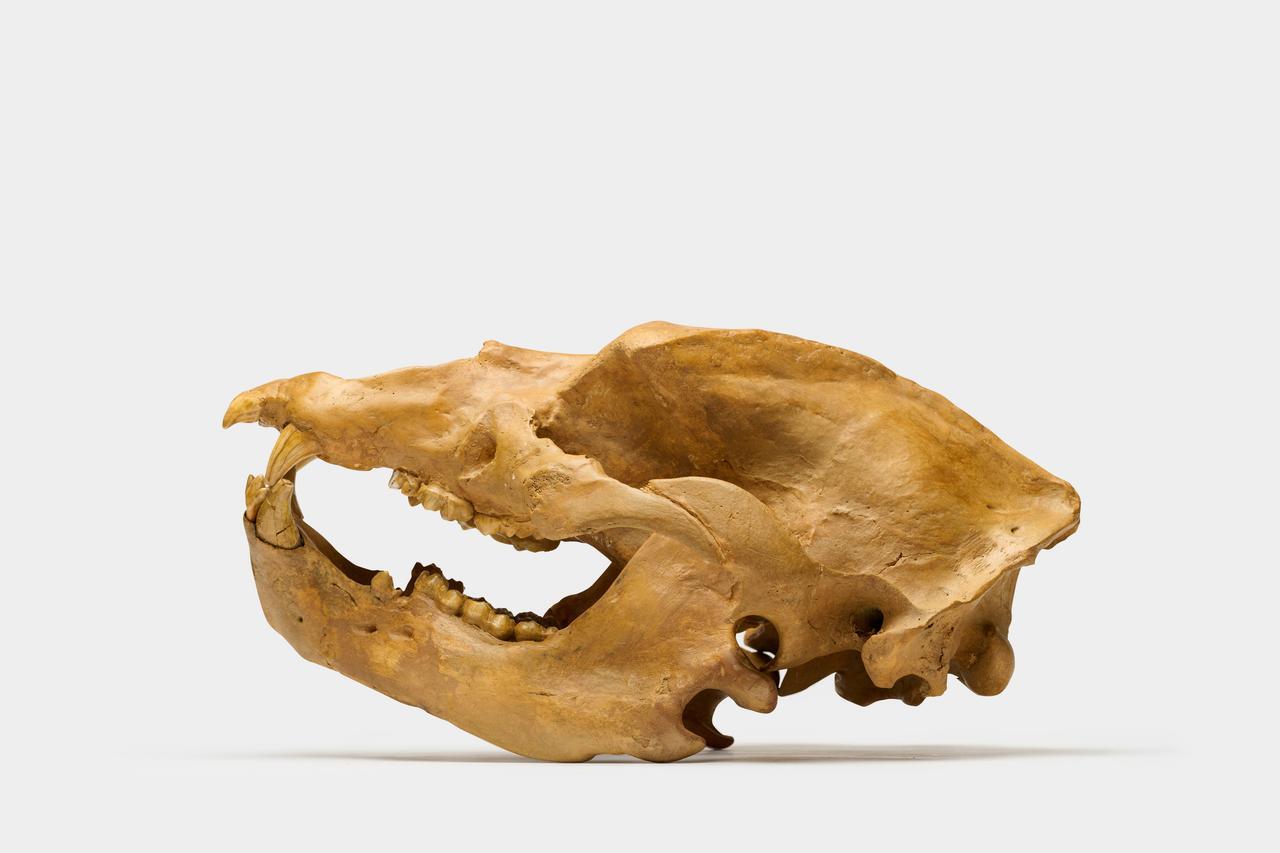
Fossil bone (No reserve price)

05
days
07
hours
55
minutes
17
seconds
Current bid
€ 2
No reserve price
3 other people are watching this object
DE
€2

Catawiki Buyer Protection

Your payment’s safe with us until you receive your object.View details

Trustpilot 4.4 | 133802 reviews

Rated Excellent on Trustpilot.

Eight fossil metapodial bones from the North Sea, dating to the Pleistoceen (late Pleistocene), likely from a woolly rhinoceros or steppe wisent, with natural condition and original authenticity.

AI-assisted summary

Description from the seller

12

Fossil Ice Age Bone (25 cm) – Middle Manus/Metatarsal Wolharige Neushoorn / Steppe Bison

Robust fossil bone from the Pleistocene (the Ice Age).
The specimen is a middle metacarpal (metacarpus) or a middle metatarsal, most likely sourced from a Woolly Rhinoceros (Coelodonta antiquitatis) or a Steppe Bison (Bison priscus). The bone exhibits the characteristic dark, mineralized coloration of a North Sea find / sand-extraction find. The large, broad articular surface on the side is still very nicely intact and recognizable in shape. The other end of the shaft has broken off in the past.

Specifications:
Type: Metapodium (middle hand bone or middle foot bone)
Species: Woolly rhinoceros or steppe bison
Age: Pleistocene (about 30,000 – 50,000 years old)
Length: 25 centimeters
Weight: 900 grams
Condition: Solid fossil material. See photos for exact details.

13

This authentic shin bone originates from the seabed of the North Sea and dates to the Pleistocene (circa 20,000 to 50,000 years old).
The bone is most likely attributable to a steppe bison (Bison priscus) or an aurochs (Bos primigenius).

Specifications:
Bone type: Metatarsus (midfoot bone)
Species: Steppe bison / aurochs (yak deer-like grazing)
Origin: North Sea (Netherlands)
Age: Pleistocene / Ice Age (ca. 20,000 – 50,000 years old)
Length: 23.5 cm
Weight: 350 grams
Condition: Conserved

14

Middle metatarsal (Metatarsus)
Species: Steppe bison (Bison priscus)
Dating: Pleistocene (Late Pleistocene, ca. 120,000 – 11,700 years old)
Indication of findspot: North Sea floor / Dutch coast (Mammoth Steppe)

Physical specifications
Length: 29.0 cm
Weight: 780 grams
Condition: Fully fossilized. The bone is heavily mineralized and deeply colored due to absorption of iron and manganese from the soil.

15

Fragment of a Woolly Mammoth rib (Mammuthus primigenius)
Size: Length 39 cm
Weight: 450 grams
Dating: Pleistocene (ca. 10,000 - 40,000 years old)
Condition: Beautiful deep brown in color due to mineralization. The bone is completely dry, stable, and shows the characteristic spongy inner structure nicely on the underside.

16

Fragment of a rib from a large mammal from the Ice Age (very likely Woolly Mammoth, Mammuthus primigenius).
Dating: Pleistocene (ca. 20,000 – 40,000 years old).
Dimensions: Length: 36 cm | Weight: 300 grams.
Features: Deep brown to black discolored bone fragment with a porous internal structure. Shows the characteristic flat shape and slight curvature of a rib, including partially worn rib head remnants (articular end).

17

Fourth cervical vertebra of a reindeer (Rangifer tarandus).
Age: About 30,000 years old (Pleistocene / Ice Age).
Findspot: North Sea floor.
Size: 11 cm long and 130 grams heavy.
Characteristic: Solid and dark brown from minerals from the sea bed.

18

Vertebral body (centrum) of a fossil vertebra?
Size: diameter 5.5 cm, thickness 1 cm
Weight: 70 grams

19

Vertebral body of a medium to large whale-related animal?
Size: diameter 5 cm, thickness 4 - 2.5 cm
Weight: 180 grams

Note:
All objects come from a private collection and originate from the North Sea.
The descriptions and texts were, among other things, produced with AI.

12

Fossil Ice Age Bone (25 cm) – Middle Manus/Metatarsal Wolharige Neushoorn / Steppe Bison

Robust fossil bone from the Pleistocene (the Ice Age).
The specimen is a middle metacarpal (metacarpus) or a middle metatarsal, most likely sourced from a Woolly Rhinoceros (Coelodonta antiquitatis) or a Steppe Bison (Bison priscus). The bone exhibits the characteristic dark, mineralized coloration of a North Sea find / sand-extraction find. The large, broad articular surface on the side is still very nicely intact and recognizable in shape. The other end of the shaft has broken off in the past.

Specifications:
Type: Metapodium (middle hand bone or middle foot bone)
Species: Woolly rhinoceros or steppe bison
Age: Pleistocene (about 30,000 – 50,000 years old)
Length: 25 centimeters
Weight: 900 grams
Condition: Solid fossil material. See photos for exact details.

13

This authentic shin bone originates from the seabed of the North Sea and dates to the Pleistocene (circa 20,000 to 50,000 years old).
The bone is most likely attributable to a steppe bison (Bison priscus) or an aurochs (Bos primigenius).

Specifications:
Bone type: Metatarsus (midfoot bone)
Species: Steppe bison / aurochs (yak deer-like grazing)
Origin: North Sea (Netherlands)
Age: Pleistocene / Ice Age (ca. 20,000 – 50,000 years old)
Length: 23.5 cm
Weight: 350 grams
Condition: Conserved

14

Middle metatarsal (Metatarsus)
Species: Steppe bison (Bison priscus)
Dating: Pleistocene (Late Pleistocene, ca. 120,000 – 11,700 years old)
Indication of findspot: North Sea floor / Dutch coast (Mammoth Steppe)

Physical specifications
Length: 29.0 cm
Weight: 780 grams
Condition: Fully fossilized. The bone is heavily mineralized and deeply colored due to absorption of iron and manganese from the soil.

15

Fragment of a Woolly Mammoth rib (Mammuthus primigenius)
Size: Length 39 cm
Weight: 450 grams
Dating: Pleistocene (ca. 10,000 - 40,000 years old)
Condition: Beautiful deep brown in color due to mineralization. The bone is completely dry, stable, and shows the characteristic spongy inner structure nicely on the underside.

16

Fragment of a rib from a large mammal from the Ice Age (very likely Woolly Mammoth, Mammuthus primigenius).
Dating: Pleistocene (ca. 20,000 – 40,000 years old).
Dimensions: Length: 36 cm | Weight: 300 grams.
Features: Deep brown to black discolored bone fragment with a porous internal structure. Shows the characteristic flat shape and slight curvature of a rib, including partially worn rib head remnants (articular end).

17

Fourth cervical vertebra of a reindeer (Rangifer tarandus).
Age: About 30,000 years old (Pleistocene / Ice Age).
Findspot: North Sea floor.
Size: 11 cm long and 130 grams heavy.
Characteristic: Solid and dark brown from minerals from the sea bed.

18

Vertebral body (centrum) of a fossil vertebra?
Size: diameter 5.5 cm, thickness 1 cm
Weight: 70 grams

19

Vertebral body of a medium to large whale-related animal?
Size: diameter 5 cm, thickness 4 - 2.5 cm
Weight: 180 grams

Note:
All objects come from a private collection and originate from the North Sea.
The descriptions and texts were, among other things, produced with AI.

Details

Number of objects
8
Country of origin
North Sea
Geological period
Quaternary, Pleistocene (2.58 - 0.0117 million years)
Condition
Natural
Authenticity
Original/official
The NetherlandsVerified
Private

Similar objects

For you in

Fossils