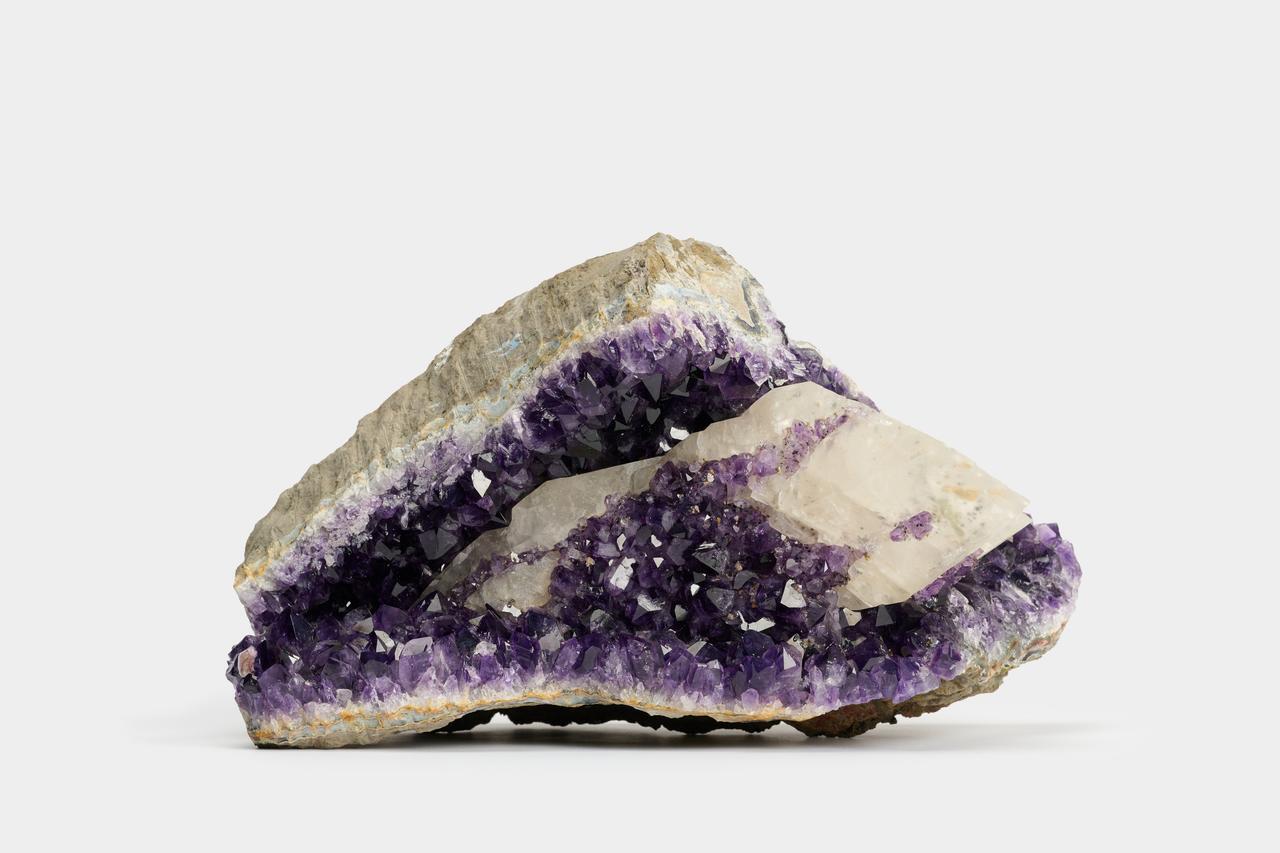
Pyrite Cube - Height: 6 cm - Width: 6.6 cm- 961 g - (1)


Catawiki Buyer Protection
Your payment’s safe with us until you receive your object.View details
Trustpilot 4.4 | 134742 reviews
Rated Excellent on Trustpilot.
Natural pyrite cube from Peru, weighing 961 g with dimensions about 6.5 × 7 × 7 cm, featuring a metallic luster and stepped crystal faces.
Description from the seller
PIRITE NATURAL EN MATRIZ – 961 g – 6,5 × 7 × 7 cm
Overview
Magnificent specimen of natural pyrite with intense metallic luster and spectacular stepped crystal planes that reflect light with strong visual impact. The piece presents a very attractive combination of crystallized faces, natural fractures, and growth surfaces that allow a clear appreciation of the internal structure of this famous iron sulfide.
Its appearance immediately evokes why pyrite has historically been known as the “Fool’s Gold.” However, for collectors and mineral enthusiasts, authentic pyrite possesses a personality and beauty of its own that have made it one of the most sought-after minerals in the world.
Measurements and weight
Measurements: 6.5 × 7 × 7 cm
Weight: 961 g
This is a specimen of notable size, with a strong visual presence both in a display cabinet and in a collection of metallic minerals.
Mineralogical identification
Mineral: Pyrite
Group: Sulfides
Crystal system: Cubic (isometric)
Luster: Intense metallic
Color: Characteristic brass-golden
Transparency: Opaque
Pyrite is one of the most easily recognizable minerals due to its metallic luster and natural golden hue.
Chemical formula
FeS₂
Pyrite is composed of iron and sulfur and constitutes one of the most abundant sulfides in the Earth's crust.
Visual and geological reading
The piece shows very pronounced growth surfaces, with crystallographic step-like features and zones of natural fracture that allow observation of different mineral formation phases.
The reflective faces generate intense golden flashes under direct lighting, while the rougher areas add texture and visual depth. This combination of crystal geometry and natural growth makes each specimen a unique piece.
History of the mineral
The word “pyrite” comes from the Greek pyr, meaning fire, because it produces sparks when struck against steel.
For centuries it was used to start fires, manufacture ignition tools, and as a secondary source of sulfur. It also played an important role in historical mining due to its resemblance to gold, misled many prospectors during the great mining booms.
Today it is one of the minerals most appreciated by collectors due to the spectacularity of its crystal forms and its great didactic value in mineralogy.
Authenticity and tests
Identification has been performed by direct mineralogical observation:
• Characteristic metallic luster.
• Natural brass-golden color.
• Crystal structures compatible with pyrite.
• High weight typical of the mineral.
• Morphology and natural fractures coherent with authentic specimens.
This is not a piece laboratory-certified, but an identification based on visual and physical criteria widely recognized in the field.
Condition
Good overall conservation.
Shows fractures, irregularities, and marks inherent to extraction and natural growth, typical and expected features in specimens of this nature. No significant artificial interventions are observed.
Provenance
Origin: Peru.
Its mineralogical appearance could correspond to some of the classic pyrite-producing deposits, though it is offered exclusively as natural pyrite without specific geographic attribution.
Market, scarcity, and investment
Authentic pyrite specimens with strong luster, a weight close to a kilogram, and good visual presence maintain steady demand among collectors, decorators, and geology enthusiasts.
Authentic specimens, especially in large format, are increasingly rare, reinforcing collector interest and potential value appreciation.
Forgeries and decorative reproductions present on some platforms make authentic, natural mineral specimens more valued by experienced buyers.
Recognition of the miners’ work
Each mineral specimen represents the result of geological processes developed over millions of years and the human effort required to locate, extract, select, and preserve these pieces. Behind every mineral lies the specialized work of generations of miners and professionals who enable these geological treasures to reach today’s collections.
Conclusion
A naturally occurring pyrite specimen with great presence, weighing 961 grams, excellent metallic luster, and attractive visible crystal structures. A decorative and collectible piece that merges mineralogical interest, aesthetics, and collector value.
Seller profile
Entrepreneur with over 40 years of experience, engineer, MBA, and Master in Marketing. Personal selection of minerals and collector pieces based on criteria of authenticity, geological interest, and value to the collector. Each specimen is individually checked before sale to ensure an honest and rigorous description.
PIRITE NATURAL EN MATRIZ – 961 g – 6,5 × 7 × 7 cm
Overview
Magnificent specimen of natural pyrite with intense metallic luster and spectacular stepped crystal planes that reflect light with strong visual impact. The piece presents a very attractive combination of crystallized faces, natural fractures, and growth surfaces that allow a clear appreciation of the internal structure of this famous iron sulfide.
Its appearance immediately evokes why pyrite has historically been known as the “Fool’s Gold.” However, for collectors and mineral enthusiasts, authentic pyrite possesses a personality and beauty of its own that have made it one of the most sought-after minerals in the world.
Measurements and weight
Measurements: 6.5 × 7 × 7 cm
Weight: 961 g
This is a specimen of notable size, with a strong visual presence both in a display cabinet and in a collection of metallic minerals.
Mineralogical identification
Mineral: Pyrite
Group: Sulfides
Crystal system: Cubic (isometric)
Luster: Intense metallic
Color: Characteristic brass-golden
Transparency: Opaque
Pyrite is one of the most easily recognizable minerals due to its metallic luster and natural golden hue.
Chemical formula
FeS₂
Pyrite is composed of iron and sulfur and constitutes one of the most abundant sulfides in the Earth's crust.
Visual and geological reading
The piece shows very pronounced growth surfaces, with crystallographic step-like features and zones of natural fracture that allow observation of different mineral formation phases.
The reflective faces generate intense golden flashes under direct lighting, while the rougher areas add texture and visual depth. This combination of crystal geometry and natural growth makes each specimen a unique piece.
History of the mineral
The word “pyrite” comes from the Greek pyr, meaning fire, because it produces sparks when struck against steel.
For centuries it was used to start fires, manufacture ignition tools, and as a secondary source of sulfur. It also played an important role in historical mining due to its resemblance to gold, misled many prospectors during the great mining booms.
Today it is one of the minerals most appreciated by collectors due to the spectacularity of its crystal forms and its great didactic value in mineralogy.
Authenticity and tests
Identification has been performed by direct mineralogical observation:
• Characteristic metallic luster.
• Natural brass-golden color.
• Crystal structures compatible with pyrite.
• High weight typical of the mineral.
• Morphology and natural fractures coherent with authentic specimens.
This is not a piece laboratory-certified, but an identification based on visual and physical criteria widely recognized in the field.
Condition
Good overall conservation.
Shows fractures, irregularities, and marks inherent to extraction and natural growth, typical and expected features in specimens of this nature. No significant artificial interventions are observed.
Provenance
Origin: Peru.
Its mineralogical appearance could correspond to some of the classic pyrite-producing deposits, though it is offered exclusively as natural pyrite without specific geographic attribution.
Market, scarcity, and investment
Authentic pyrite specimens with strong luster, a weight close to a kilogram, and good visual presence maintain steady demand among collectors, decorators, and geology enthusiasts.
Authentic specimens, especially in large format, are increasingly rare, reinforcing collector interest and potential value appreciation.
Forgeries and decorative reproductions present on some platforms make authentic, natural mineral specimens more valued by experienced buyers.
Recognition of the miners’ work
Each mineral specimen represents the result of geological processes developed over millions of years and the human effort required to locate, extract, select, and preserve these pieces. Behind every mineral lies the specialized work of generations of miners and professionals who enable these geological treasures to reach today’s collections.
Conclusion
A naturally occurring pyrite specimen with great presence, weighing 961 grams, excellent metallic luster, and attractive visible crystal structures. A decorative and collectible piece that merges mineralogical interest, aesthetics, and collector value.
Seller profile
Entrepreneur with over 40 years of experience, engineer, MBA, and Master in Marketing. Personal selection of minerals and collector pieces based on criteria of authenticity, geological interest, and value to the collector. Each specimen is individually checked before sale to ensure an honest and rigorous description.
Details
Disclaimer
It is believed that certain gemstones and minerals have beneficial health and spiritual properties. However, using or wearing gemstones or minerals does not mean that you can treat, cure or prevent any disease. Please consult your health care professional for information on health care issues and do not stop any medications or courses of treatment, without first consulting your health care professional. The use of gemstones or minerals as a wellness therapy is one of personal choice. While stones or crystals have been used historically to relieve or prevent symptoms, the objects sold on our website offer no guarantee of results. Therefore, Catawiki cannot guarantee or be held liable for the effectiveness of these objects sold herein.