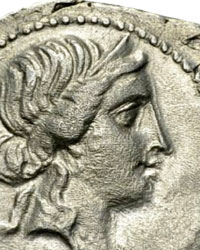
Roman Empire. Macrinus (AD 217-218). Denarius

05
days
14
hours
45
minutes
33
seconds
Starting bid
€ 1
Reserve price not met
Alessandro Fiamingo
Expert
Selected by Alessandro Fiamingo

Over ten years of experience as a conservation scientist in various contexts, including work at the Vatican Museums.

Estimate  € 450 - € 500
No bids placed

Catawiki Buyer Protection

Your payment’s safe with us until you receive your object.View details

Trustpilot 4.4 | 135253 reviews

Rated Excellent on Trustpilot.

Description from the seller

From my private collection!

Ancient Roman Imperial period Macrinus (217–218 AD). AR Denarius (about 2.1). Rome, AD 218

IMP C M OPEL SEV MACRINVS AVG, laurel wreath, armored bust of Macrinus to the right, viewed from the front / PONTIF MAX TR P II COS P P, Macrinus stands in a triumphal quadruple horse chariot to the left, branch held upward in the right hand, scepter in the left, crowned by Victory standing behind in the wagon.

RIC IV.II 36.

Macrinus was born around AD 165 in Mauretania. His family belonged to the upper middle class, which enabled him to receive an education that propelled him to high offices as a bureaucrat during the reign of Septimius Severus. Caracalla appointed Macrinus as Praetorian Prefect, a position of considerable power, second only to the emperor. In AD 216 Macrinus accompanied Caracalla on a campaign against the Parthians. There he learned of a letter that implicated him in a plot against the emperor. He acted quickly and had Caracalla murdered by one of his bodyguards. Macrinus swore his innocence and convinced the army to proclaim him emperor on 11 April 217. Although the Senate in Rome was glad to be rid of the unpopular Caracalla, it met Macrinus with skepticism but nevertheless gave him a chance. Hoping to withdraw from the campaign and return to Rome, Macrinus sought a peace agreement with the Parthians. They, sensing weakness, gathered their troops, forcing Macrinus to pay large bribes and reparations.

The Roman soldiers saw this as a defeat, and Macrinus further offended them by revoking the generous pay raise Caracalla had granted. Discontent grew, and Caracalla’s influential aunt Julia Maesa bribed the Roman garrison at Emesa in Syria to proclaim her 13-year-old grandson Elagabal as emperor on 15 May 218 AD. Macrinus, who initially rejected the revolt, eventually gathered his loyal legions on 8 June to meet the rebels near Antioch. Although his troops were close to victory, Macrinus lost his nerve and fled. His demoralized soldiers switched sides and declared their support for Elagabal. Disguised as a courier, Macrinus attempted to flee through Asia Minor but was captured at Chalcedon and executed. His son met a similar fate on the way to Parthian exile.

From my private collection!

Ancient Roman Imperial period Macrinus (217–218 AD). AR Denarius (about 2.1). Rome, AD 218

IMP C M OPEL SEV MACRINVS AVG, laurel wreath, armored bust of Macrinus to the right, viewed from the front / PONTIF MAX TR P II COS P P, Macrinus stands in a triumphal quadruple horse chariot to the left, branch held upward in the right hand, scepter in the left, crowned by Victory standing behind in the wagon.

RIC IV.II 36.

Macrinus was born around AD 165 in Mauretania. His family belonged to the upper middle class, which enabled him to receive an education that propelled him to high offices as a bureaucrat during the reign of Septimius Severus. Caracalla appointed Macrinus as Praetorian Prefect, a position of considerable power, second only to the emperor. In AD 216 Macrinus accompanied Caracalla on a campaign against the Parthians. There he learned of a letter that implicated him in a plot against the emperor. He acted quickly and had Caracalla murdered by one of his bodyguards. Macrinus swore his innocence and convinced the army to proclaim him emperor on 11 April 217. Although the Senate in Rome was glad to be rid of the unpopular Caracalla, it met Macrinus with skepticism but nevertheless gave him a chance. Hoping to withdraw from the campaign and return to Rome, Macrinus sought a peace agreement with the Parthians. They, sensing weakness, gathered their troops, forcing Macrinus to pay large bribes and reparations.

The Roman soldiers saw this as a defeat, and Macrinus further offended them by revoking the generous pay raise Caracalla had granted. Discontent grew, and Caracalla’s influential aunt Julia Maesa bribed the Roman garrison at Emesa in Syria to proclaim her 13-year-old grandson Elagabal as emperor on 15 May 218 AD. Macrinus, who initially rejected the revolt, eventually gathered his loyal legions on 8 June to meet the rebels near Antioch. Although his troops were close to victory, Macrinus lost his nerve and fled. His demoralized soldiers switched sides and declared their support for Elagabal. Disguised as a courier, Macrinus attempted to flee through Asia Minor but was captured at Chalcedon and executed. His son met a similar fate on the way to Parthian exile.

Details

Era
Before 1400
Culture/region
Roman Empire
Ruler
Macrinus (AD 217-218)
Denomination
Denarius
Metal
AR
Condition
Ungraded
Weight
2 g
Number of objects
1
AustriaVerified
38
Objects sold
100%
Private

Similar objects

For you in

Ancient Coins