No. 104695733

No. 104695733
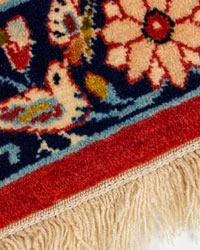
Tapis ancien chinois, Baotou fin XIXe siècle – 190 x 160 cm - Fait main - Élégant tapis chinois ancien de la fin du XIXe siècle, présentant un remarquable décor floral sur fond bleu nuancé. Le champ central est orné d'un médaillon circulaire fleuri, entouré de riches bouquets dans les écoinçons. L'ensemble est encadré d'une belle bordure à motif de grecque, typique de la production chinoise de cette époque. Sa palette raffinée de bleus et de blancs lui confère une présence décorative particulièrement séduisante, idéale dans un intérieur classique, Art Déco ou contemporain. État : Tapis vendu dans son état de découverte. Très poussiéreux, nécessitant un nettoyage complet. Présente plusieurs restaurations anciennes notamment en bordure et dans le champ. Malgré ces imperfections, il conserve un fort pouvoir décoratif et un charme authentique. Dimensions : 190 x 160 cm Origine : Chine Époque : Fin XIXe siècle Matière : Laine nouée main Histoire : Les tapis Baotou (ou Pao-tou dans l’ancienne transcription) sont des tapis traditionnels chinois tissés dans la ville de Baotou, en Mongolie intérieure. Ils comptent parmi les tapis chinois les plus recherchés par les collectionneurs pour leur qualité de laine et leurs motifs picturaux. OriginesLa région de Baotou est située dans les grandes steppes de Mongolie intérieure, une zone favorable à l’élevage des moutons. Grâce à l’abondance d’une laine de qualité, l’art du tapis s’y est développé à partir du XIXᵉ siècle. Selon les sources locales, le savoir-faire du tissage aurait été introduit durant la période Tongzhi de la dynastie Qing (vers 1862-1874) par des artisans venus du Ningxia voisin; Âge d’or et déclin L’âge d’or des tapis Baotou se situe entre la fin du XIXᵉ siècle et les années 1930. Les pièces de cette période étaient exportées vers l’Europe et l’Amérique, où elles étaient appréciées pour leur style Art déco et leur originalité. Après les bouleversements politiques du milieu du XXᵉ siècle et l’industrialisation de la région, la production artisanale traditionnelle a fortement diminué. Les anciens tapis Baotou sont aujourd’hui recherchés sur le marché des antiquité
How to buy on Catawiki
1. Discover something special
2. Place the top bid
3. Make a secure payment