No. 104740812

No longer available
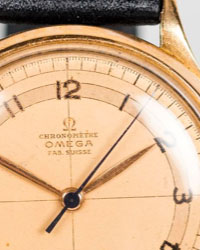
Omega - Constellation F300Hz - Men - 1972
Bidding closed
2 weeks ago

Omega - Constellation F300Hz - Men - 1972

This is an extremely rate watch, given its features: - Rare gold leaf dial. - 14k Gold Filled Bezel. - Portuguese date wheel. - All original and in excellent condition for the year 1972. Besides, bracelet that is not original but comes with the watch. ** This watch has not been serviced and that is reflected in the price. 1972 Omega Constellation C f300 Hz ref. 198.0034, caliber 1260, 14k gold filled bezel, gold flake dial (either maybe what it might be onyx hour markers, which were common in the 70s by Omega) 37.6mm. case. The f300 movement was developed by ESA, an update by Max Hetzel of the original Bulova tuning fork . ESA supplied these to many companies inc; Longines, IWC, Baume & Mercier, Tissot, Omega, etc…Omega were their largest customer by far, all Omega movements have a gilt finish compared to the Geneve stripes of the other marques. The Omega f300 chronometers were tested to mechanical movements standards and they easily pass. Although more accurate than mechanical movements, tuning fork movements were quickly replaced by quartz movements, which became cheaper to produce and more accurate. Since 1952 the Omega Constellation has been among the highest level of Luxurious and precise watches. On the dial the name Constellation is on top of a Gold Star. On the back of the case we find the famous medallion featuring an observatory crowned by a Constellation of eight stars, evoking the numerous exploits of Omega in word chronometer competition. In 1958 the Constellation Calendar was included. It was available in the three different levels of finish from Standard to Grand Luxe. At that time the Constellation was advertised as being for the man who already has a watch, an allusion to the fact that a Constellation was so much more. The watch drastically changed in 1964 with the introduction of the C-shaped Constellations, which, although they had a different overall look, continued to be elegant, luxurious and ultra-precise. The new design reflected the emerging trend of the 1960s toward bigger watches. The revised Connie had a minimalist dial and the lugs were fully integrated, maximizing the impression of a larger case. The C-Shape has come some way into gaining acceptance since the days they were generally shunned in preference to pie pan models. A few years ago, thankfully, they were very cheap, but a growing number of collectors seem to want to have one in their collections of Connie’s and I’ve seen prices rise considerably over the years. The Connie’s, as Omega enthusiasts fondly refer to them, were one of the finest and most accurate lines of watches available at the time and catered to various budgets and tastes. Omega was founded in 1848 by Louis Brandt at the age of 23. The brand’s reputation grew fast and in 1895 the watches achieved a precision of 30 seconds a day. By the turn of the 19th century Omega was one of Switzerland’s largest watch companies with 240,000 watches produced annually and employing 800 people. Omega made its debut in sports during the Gordon Bennett international ballooning Cup in 1917; since then Omega has gone on to be the official timekeeper at 21 Olympic Games. In 1936 Omega set the remarkable World precision record of 97.8 points at the Kew-Teddington observatory in England. In 1957, with motorsport in mind, Omega launched the Speedmaster, which in 1965 was chosen by NASA as its official chronometer in Space. Four years later the Moonwatch was the first watch to be worn on the Moon, when on 21st July 1969 Neil Armstrong made his giant leap for mankind. Currently Omega belongs to the Swatch Group.

No. 104740812

No longer available
Omega - Constellation F300Hz - Men - 1972

Omega - Constellation F300Hz - Men - 1972

This is an extremely rate watch, given its features:

- Rare gold leaf dial.

- 14k Gold Filled Bezel.

- Portuguese date wheel.

- All original and in excellent condition for the year 1972. Besides, bracelet that is not original but comes with the watch.


** This watch has not been serviced and that is reflected in the price.

1972 Omega Constellation C f300 Hz ref. 198.0034, caliber 1260, 14k gold filled bezel, gold flake dial (either maybe what it might be onyx hour markers, which were common in the 70s by Omega) 37.6mm. case.

The f300 movement was developed by ESA, an update by Max Hetzel of the original Bulova tuning fork . ESA supplied these to many companies inc; Longines, IWC, Baume & Mercier, Tissot, Omega, etc…Omega were their largest customer by far, all Omega movements have a gilt finish compared to the Geneve stripes of the other marques. The Omega f300 chronometers were tested to mechanical movements standards and they easily pass. Although more accurate than mechanical movements, tuning fork movements were quickly replaced by quartz movements, which became cheaper to produce and more accurate.

Since 1952 the Omega Constellation has been among the highest level of Luxurious and precise watches.

On the dial the name Constellation is on top of a Gold Star. On the back of the case we find the famous medallion featuring an observatory crowned by a Constellation of eight stars, evoking the numerous exploits of Omega in word chronometer competition.

In 1958 the Constellation Calendar was included. It was available in the three different levels of finish from Standard to Grand Luxe. At that time the Constellation was advertised as being for the man who already has a watch, an allusion to the fact that a Constellation was so much more.

The watch drastically changed in 1964 with the introduction of the C-shaped Constellations, which, although they had a different overall look, continued to be elegant, luxurious and ultra-precise. The new design reflected the emerging trend of the 1960s toward bigger watches. The revised Connie had a minimalist dial and the lugs were fully integrated, maximizing the impression of a larger case.

The C-Shape has come some way into gaining acceptance since the days they were generally shunned in preference to pie pan models. A few years ago, thankfully, they were very cheap, but a growing number of collectors seem to want to have one in their collections of Connie’s and I’ve seen prices rise considerably over the years. The Connie’s, as Omega enthusiasts fondly refer to them, were one of the finest and most accurate lines of watches available at the time and catered to various budgets and tastes.

Omega was founded in 1848 by Louis Brandt at the age of 23. The brand’s reputation grew fast and in 1895 the watches achieved a precision of 30 seconds a day.
By the turn of the 19th century Omega was one of Switzerland’s largest watch companies with 240,000 watches produced annually and employing 800 people.

Omega made its debut in sports during the Gordon Bennett international ballooning Cup in 1917; since then Omega has gone on to be the official timekeeper at 21 Olympic Games.

In 1936 Omega set the remarkable World precision record of 97.8 points at the Kew-Teddington observatory in England.

In 1957, with motorsport in mind, Omega launched the Speedmaster, which in 1965 was chosen by NASA as its official chronometer in Space. Four years later the Moonwatch was the first watch to be worn on the Moon, when on 21st July 1969 Neil Armstrong made his giant leap for mankind. Currently Omega belongs to the Swatch Group.

Bidding closed
Berry Harleman
Expert
Estimate  € 1,500 - € 1,700

Similar objects

For you in

Watches

Set a search alert
Set a search alert to get notified when new matches are available.

This object was featured in


How to buy on Catawiki

Learn more about our Buyer Protection

      1. Discover something special

      Browse through thousands of special objects selected by experts. View the photos, details and estimated value of each special object. 

      2. Place the top bid

      Find something you love and place the top bid. You can follow the auction to the end or let our system do the bidding for you. All you have to do is set a bid for the maximum amount you want to pay. 

      3. Make a secure payment

      Pay for your special object and we’ll keep your payment secure until it arrives safe and sound. We use a trusted payment system to handle all transactions. 

Have something similar to sell?

Whether you're new to online auctions or sell professionally, we can help you earn more for your special objects.

Sell your object