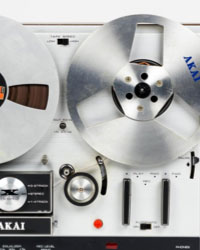
Marantz - PM400 Solid state integrated amplifier


Catawiki Buyer Protection
Your payment’s safe with us until you receive your object.View details
Trustpilot 4.4 | 137154 reviews
Rated Excellent on Trustpilot.
Marantz PM400 integrated stereo amplifier, manufactured in 1984, in very good physical condition, tested and working, delivering about 30 W per channel at 8 Ω, including power supply, dimensions 146 x 416 x 243 mm.
Description from the seller
The Marantz PM-400 is a Hi-Fi integrated stereo amplifier from the early 1980s, known for the warm and musical sound typical of the brand.
Main technical features:
Power: about 30 W per channel into 8 Ω
Integrated stereo amplifier
MM phono input for turntables
Inputs: Phono, Tuner, Aux, Tape
Bass, treble, balance and loudness controls
Headphone output
Rugged construction with discrete components
It is appreciated for reliability and good sound quality, especially when paired with moderately efficient speakers.
audio-database.com +1
Pros: As you can see from the photos, the aesthetics are perfect.
Cons: When you turn the volume knob you hear a brief crackle like a discharge. This is caused by oxidation or dust buildup inside the potentiometer (the mechanical component that controls the volume); however this defect, if desired, can be eliminated."}{}{
The Marantz PM-400 is a Hi-Fi integrated stereo amplifier from the early 1980s, known for the warm and musical sound typical of the brand.
Main technical features:
Power: about 30 W per channel into 8 Ω
Integrated stereo amplifier
MM phono input for turntables
Inputs: Phono, Tuner, Aux, Tape
Bass, treble, balance and loudness controls
Headphone output
Rugged construction with discrete components
It is appreciated for reliability and good sound quality, especially when paired with moderately efficient speakers.
audio-database.com +1
Pros: As you can see from the photos, the aesthetics are perfect.
Cons: When you turn the volume knob you hear a brief crackle like a discharge. This is caused by oxidation or dust buildup inside the potentiometer (the mechanical component that controls the volume); however this defect, if desired, can be eliminated."}{}{