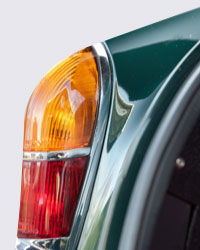
Fiat - 1300S Vignale coupe - 1965


Add to your favourites to get an alert when the auction starts.

Thirty years' experience with classic cars, specialising in Italian cars and Porsche.
Catawiki Buyer Protection
Your payment’s safe with us until you receive your object.View details
Trustpilot 4.4 | 138076 reviews
Rated Excellent on Trustpilot.
Description from the seller
Fiat 1300S Vignale Coupé 1965
• No. 5 van slechts ca. 50 geproduceerde exemplaren
• S-version (Giannini tuning) with 67 hp
• Italian & Greek registration documents present
• Beautiful green metallic paintwork
• Bordeaux red leather interior
HISTORY/DOCUMENTATION:
A rare beauty: of this Fiat 1300S only about 50 units were built by coachbuilder Vignale. This example is the fifth produced and was newly delivered by the dealer in Bergamo, Italy on 13 April 1965. Particularly notable is the original documentation that remains with the car: the original delivery document provides a lot of information including ownership and maintenance history. This makes the ownership history complete. Until 2015 the Fiat remained in Italy, after which it was exported to a private collection in Greece. It then came to the Netherlands, where technical work was invested in the car. The car is in well-kept condition both visually and technically. Thanks to the available EU documentation the car can be registered on its license plate easily. Maintenance invoices accompany the car.
EXTERIOR:
The beautiful silhouette is enhanced by the car’s stunning green metallic color. The paint is in good condition. Fittings of body parts align well, indicating a damage-free history. Coupés built by Vignale differ in some respects from one another because the cars were built to customer specifications. This example, for instance, has double rear light units, which, as far as we know, is unique. This gives the car a more imposing look. The headlights were manufactured by Carello. The car sits on 13-inch Cromodora CD3 alloy wheels with chrome Fiat center caps, fitted with 185/70 BF Goodrich tires.
INTERIOR:
The interior features red vinyl seat upholstery, black carpeting, and a dashboard with a wood finish. Equipment includes power windows at the front, quarter windows at the rear, and a radio with preset buttons. The backrest of the front seats can be folded forward to facilitate access to the rear bench. The dashboard is surrounded by a horizontal speedometer up to 180 km/h and a set of indicators that show engine speed, rather than a tachometer. As well as the electrically operated windows, these are fairly unique features for 1965. The interior is in neat condition. The upholstery of the seats, door panels, rear seat, and headlining are in very good condition. The glass and seals are in fresh condition as well. The five-digit odometer shows 23,031 kilometers. The original and beautiful Nardi steering wheel, which was standard on these models at the time, is still present. In the trunk there is a full-size steel spare wheel.
TECHNICAL:
Over the years the Fiat has been well maintained. The previous owner had the transmission, brakes, and carburetors overhauled. In 2016, among other things, the crankshaft seal, thermostat, contact points, and brake lines were replaced. In February 2020 the front brake calipers were rebuilt. This example also features a Giannini Automobili-tuned engine. In the 1960s Giannini was viewed as the Roman alternative to Abarth; both companies specialized in improving Fiat models. With changes to the cylinder head, camshaft, carburetor, air filter, exhaust, and final drive, the Giannini 1300 S differs considerably from the standard Fiat 1300. Power increases from 60 to 67 hp and the top speed rises to around 150 km/h, compared with 140 km/h for the original model. The engine is paired with a four-speed manual gearbox with gearshift on the steering column. The car drives, brakes, and shifts well.
GENERAL:
This compact Italian coupé was built in the mid-1960s by Carrozzeria Vignale and was based on the chassis and technology of the Fiat 1300 Berlina. Thanks to Giovanni Michelotti’s stylish design, this car offered an affordable way to stand out from the crowd.
For coachbuilders, the 1950s were a challenging period. Many companies that still built their cars entirely by hand vanished from the scene. Some brands survived by creating exclusive designs or modernizing their production. Even at Vignale, a gradual shift occurred from individual orders to small-scale volume production. The models based on the Fiat 600 and the Fiat Multipla variants proved especially successful. Around 1960 Michelotti increasingly focused on larger design studios and projects, while Alfredo Vignale decided to expand the company and mechanize production. In August 1961 the coachbuilder moved the factory to a new complex in Grugliasco, near Turin. There the production really took off. In this factory the last Lancia Appia models, the Flavia, the Maserati 3500 GTV and Sebring were produced, as well as various Fiat models that were later sold under the Vignale name. The economic downturn at the end of the 1960s ultimately marked the end for many small coachbuilders. Due to the limited production numbers and the labor-intensive production process, Vignale cars became too expensive to stay competitive. Alfredo Vignale eventually sold the company to De Tomaso, which used the factory for producing the De Tomaso Pantera. It is said that only 15 driving examples of the 1300 Vignale Coupé are still known to exist.
Seller's Story
Fiat 1300S Vignale Coupé 1965
• No. 5 van slechts ca. 50 geproduceerde exemplaren
• S-version (Giannini tuning) with 67 hp
• Italian & Greek registration documents present
• Beautiful green metallic paintwork
• Bordeaux red leather interior
HISTORY/DOCUMENTATION:
A rare beauty: of this Fiat 1300S only about 50 units were built by coachbuilder Vignale. This example is the fifth produced and was newly delivered by the dealer in Bergamo, Italy on 13 April 1965. Particularly notable is the original documentation that remains with the car: the original delivery document provides a lot of information including ownership and maintenance history. This makes the ownership history complete. Until 2015 the Fiat remained in Italy, after which it was exported to a private collection in Greece. It then came to the Netherlands, where technical work was invested in the car. The car is in well-kept condition both visually and technically. Thanks to the available EU documentation the car can be registered on its license plate easily. Maintenance invoices accompany the car.
EXTERIOR:
The beautiful silhouette is enhanced by the car’s stunning green metallic color. The paint is in good condition. Fittings of body parts align well, indicating a damage-free history. Coupés built by Vignale differ in some respects from one another because the cars were built to customer specifications. This example, for instance, has double rear light units, which, as far as we know, is unique. This gives the car a more imposing look. The headlights were manufactured by Carello. The car sits on 13-inch Cromodora CD3 alloy wheels with chrome Fiat center caps, fitted with 185/70 BF Goodrich tires.
INTERIOR:
The interior features red vinyl seat upholstery, black carpeting, and a dashboard with a wood finish. Equipment includes power windows at the front, quarter windows at the rear, and a radio with preset buttons. The backrest of the front seats can be folded forward to facilitate access to the rear bench. The dashboard is surrounded by a horizontal speedometer up to 180 km/h and a set of indicators that show engine speed, rather than a tachometer. As well as the electrically operated windows, these are fairly unique features for 1965. The interior is in neat condition. The upholstery of the seats, door panels, rear seat, and headlining are in very good condition. The glass and seals are in fresh condition as well. The five-digit odometer shows 23,031 kilometers. The original and beautiful Nardi steering wheel, which was standard on these models at the time, is still present. In the trunk there is a full-size steel spare wheel.
TECHNICAL:
Over the years the Fiat has been well maintained. The previous owner had the transmission, brakes, and carburetors overhauled. In 2016, among other things, the crankshaft seal, thermostat, contact points, and brake lines were replaced. In February 2020 the front brake calipers were rebuilt. This example also features a Giannini Automobili-tuned engine. In the 1960s Giannini was viewed as the Roman alternative to Abarth; both companies specialized in improving Fiat models. With changes to the cylinder head, camshaft, carburetor, air filter, exhaust, and final drive, the Giannini 1300 S differs considerably from the standard Fiat 1300. Power increases from 60 to 67 hp and the top speed rises to around 150 km/h, compared with 140 km/h for the original model. The engine is paired with a four-speed manual gearbox with gearshift on the steering column. The car drives, brakes, and shifts well.
GENERAL:
This compact Italian coupé was built in the mid-1960s by Carrozzeria Vignale and was based on the chassis and technology of the Fiat 1300 Berlina. Thanks to Giovanni Michelotti’s stylish design, this car offered an affordable way to stand out from the crowd.
For coachbuilders, the 1950s were a challenging period. Many companies that still built their cars entirely by hand vanished from the scene. Some brands survived by creating exclusive designs or modernizing their production. Even at Vignale, a gradual shift occurred from individual orders to small-scale volume production. The models based on the Fiat 600 and the Fiat Multipla variants proved especially successful. Around 1960 Michelotti increasingly focused on larger design studios and projects, while Alfredo Vignale decided to expand the company and mechanize production. In August 1961 the coachbuilder moved the factory to a new complex in Grugliasco, near Turin. There the production really took off. In this factory the last Lancia Appia models, the Flavia, the Maserati 3500 GTV and Sebring were produced, as well as various Fiat models that were later sold under the Vignale name. The economic downturn at the end of the 1960s ultimately marked the end for many small coachbuilders. Due to the limited production numbers and the labor-intensive production process, Vignale cars became too expensive to stay competitive. Alfredo Vignale eventually sold the company to De Tomaso, which used the factory for producing the De Tomaso Pantera. It is said that only 15 driving examples of the 1300 Vignale Coupé are still known to exist.
Seller's Story
Details
Vehicle registration
We can help buyers register their vehicle through our trusted external partner. The process is straightforward and can be completed after purchase. Vehicle registration remains the buyer's responsibility.
Disclaimer
Catawiki always aims to offer you the best possible buying experience. Our experts virtually review and select every vehicle in line with our submission guidelines and we require our sellers to provide the most accurate description of the vehicle. However, providing a fully detailed analysis of the vehicle is extremely difficult, and close to impossible. To guide you, we ask our sellers to provide information about the vehicle’s condition. Please consider that most vehicles for sale are classic vehicles and they often already have a whole life behind them, meaning that even a condition 1 or 2 vehicle might need maintenance to be ready for the road. It is advised to carefully read our submission guidelines that further describe details about the condition grades and types to manage your expectations. Cars are sold “as is”, meaning as described and in the condition they are in at the time of the sale and without any representation, warranty or assumption of liability of any kind as to the condition by Catawiki or by the seller. The condition of this item is the opinion of the seller and may differ from yours, your local garage, or the dealer’s opinion. This does not automatically mean the car does not conform to its description. Before bidding, please check your local legislation regarding vehicle registration. Neither the seller nor Catawiki is responsible for the registration of the vehicle in your country and will not accept a cancellation for your failure to register the vehicle. We also recommend that, if possible, you arrange a viewing with the seller before placing a bid.