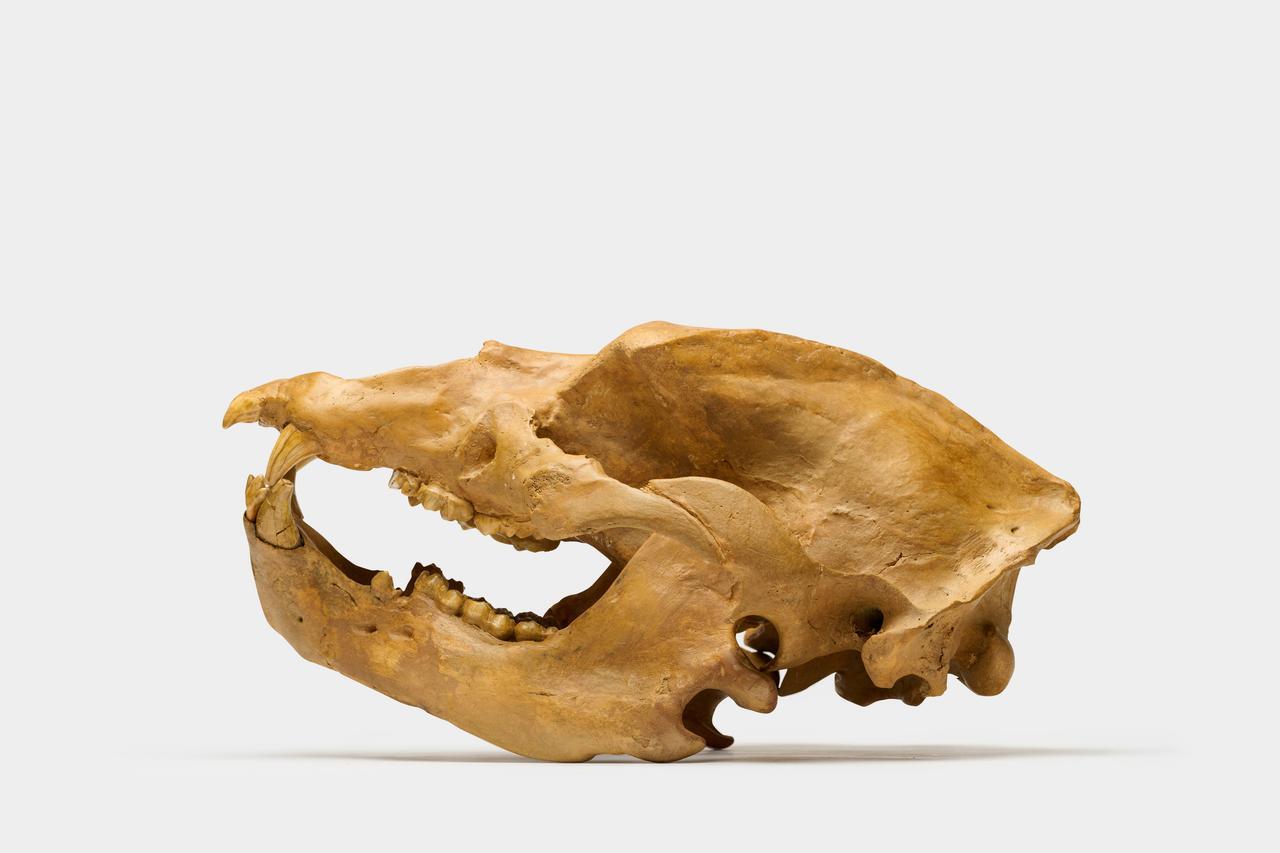
Steppe bison - Fossil mandible bone - Bison priscus - 41 cm - 23.5 cm


€100 | ||
|---|---|---|
€50 | ||
€40 | ||
Catawiki Buyer Protection
Your payment’s safe with us until you receive your object.View details
Trustpilot 4.4 | 139133 reviews
Rated Excellent on Trustpilot.
Fossil mandible of Bison priscus, the steppe bison, from Poland, dating to the Quaternary (Pleistocene) period, in natural condition; weight 638 g, dimensions 41 × 23.5 × 5 cm; authenticity original/official.
Description from the seller
Fossil mandible of Bison priscus, the so-called steppe bison, a large extinct bovine that inhabited vast areas of Eurasia. The species lived between the Middle Pleistocene and the Lower Holocene, in a time span roughly between about 600,000 and 10,000 years ago.
The specimen preserves a significant portion of the dentition and presents interesting anatomical details. Particularly evident is a permanent tooth still unerupted in the mandible, visible below the corresponding deciduous tooth, evidence of a dentition still in the process of replacement. Another dental element embedded is visible in the anterior part, where the bone is partially opened.
Natural openings and the mandibular canal that runs longitudinally through the bone, intended for the passage of nerves and blood vessels, are also well observable. In the open areas, the internal structure of the bone is also visible.
A specimen of notable size, interesting for the preservation of the dentition and for the anatomical details clearly observable.
Conditions: natural
Provenance: Poland
Weight: 638 g
Dimensions: 41 × 23.5 × 5 cm
The photographs constitute an integral part of the description. Slight differences in color rendering may occur depending on the monitor, display, or device used to view the images.
Fossil mandible of Bison priscus, the so-called steppe bison, a large extinct bovine that inhabited vast areas of Eurasia. The species lived between the Middle Pleistocene and the Lower Holocene, in a time span roughly between about 600,000 and 10,000 years ago.
The specimen preserves a significant portion of the dentition and presents interesting anatomical details. Particularly evident is a permanent tooth still unerupted in the mandible, visible below the corresponding deciduous tooth, evidence of a dentition still in the process of replacement. Another dental element embedded is visible in the anterior part, where the bone is partially opened.
Natural openings and the mandibular canal that runs longitudinally through the bone, intended for the passage of nerves and blood vessels, are also well observable. In the open areas, the internal structure of the bone is also visible.
A specimen of notable size, interesting for the preservation of the dentition and for the anatomical details clearly observable.
Conditions: natural
Provenance: Poland
Weight: 638 g
Dimensions: 41 × 23.5 × 5 cm
The photographs constitute an integral part of the description. Slight differences in color rendering may occur depending on the monitor, display, or device used to view the images.