No. 106092219

No. 106092219
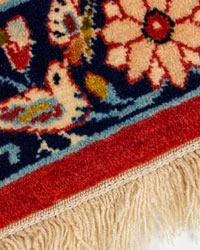
Véritable et Rare Tapis Turc Istanbul Ancien en Soie : 49x72 cm - Franges en mauvais état Traduction des écritures 1. En haut : **"شراب اندر کف"**Traduction : « Du vin à la main » ou « Le vin en main ». 2. À gauche : **"چنگ اندر کف"**Traduction : « La harpe à la main » ou « La cithare en main ». 3. À droite :**"کتف اندر کف"** Cela semble être une déformation oustylisation, mais probablement voulu pour rimer avec les autres. Le mot "کتف"signifie "épaule", ce qui ici est probablement métaphorique oupoétique. 4. En bas : **"جام بیدار هوش"** Traduction : « La coupe qui éveillel'esprit » ou « La coupe de l’éveil de l’intelligence ». Le motif est typiquedes scènes de festin ou de poésie persane classique, souvent lié à l'œuvre de**Hafez** ou **Omar Khayyam**, qui chantent les plaisirs du vin, de la musiqueet de la poésie. Parfait, je vais t'expliquer la symbolique de cette scène dansla culture persane. --- ### **1. Le Vieil Homme (Sage ou Poète) avec la coupede vin :** * Il représente souvent le **soufi** ou le **poète mystique** (commeHafez, Omar Khayyam ou Rumi). * Le vin dans la poésie persane n'est pas qu'uneboisson alcoolisée, c'est un **symbole spirituel** : * **Éveil mystique**,extase divine. * **Transcendance de la raison** pour atteindre l’amour divin. *Le vin est un "interdit" terrestre mais autorisé dans le "mondespirituel", ce qui dénonce l'hypocrisie sociale. ### **2. La femmedanseuse (Danseuse du vin) :** * Elle incarne le **plaisir charnel**, la**beauté terrestre**. * Mais dans la poésie soufie, elle devient aussi une**allégorie de l'âme libre** qui danse dans la quête d’union avec le Divin. *La position allongée et décontractée symbolise l'abandon des contraintesmorales. ### **3. Le musicien (Joueur de harpe ou de rubab) :** * Il symbolise**l’harmonie cosmique**. * La musique est vue comme un moyen d’atteindrel’extase spirituelle et de vibrer avec l’univers. * C’est l’équivalent sonoredu vin mystique : un chemin vers la perte de soi dans le Tout. ### **4. Lesinscriptions (Poésie épicurienne) :** * Elles évoquent les trois éléments dufestin mystique : **vin (شراب), musique (چنگ), et plaisir(کتف)**. * Le bas évoque la "coupe qui éveillel’esprit", donc une invitation à transcender la vie matérielle par lesplaisirs qui mènent à la conscience supérieure. --- ### **Symbolisme global :**Ce genre de scène n’est pas qu’une célébration des plaisirs terrestres : *C’est une **métaphore du chemin mystique soufi** : * On se libère des règlesrigides (religieuses ou sociales). * On cherche la **vérité divine** à traversl’art, le vin, la beauté, l’amour. * C’est une révolte douce contre l’hypocrisie et une quête d’authenticité.
How to buy on Catawiki
1. Discover something special
2. Place the top bid
3. Make a secure payment