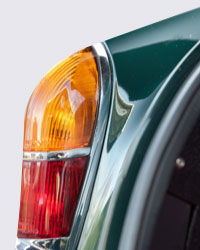
Mercedes-Benz - 180 D - 1958


Thirty years' experience with classic cars, specialising in Italian cars and Porsche.
€7,750 | ||
|---|---|---|
€70 | ||
€65 | ||
Catawiki Buyer Protection
Your payment’s safe with us until you receive your object.View details
Trustpilot 4.4 | 139877 reviews
Rated Excellent on Trustpilot.
Mercedes-Benz 180 D W120 Ponton built in 1958, located in the Netherlands, diesel, 1767 cc, 40 hp, manual transmission, green exterior with a grey interior, Dutch registration papers, CoC not present, MOT not valid, mileage 21,636 km, in overall good condition with normal signs of use and age.
Description from the seller
Mercedes-Benz 180 D W120 "Ponton"
• Original condition
• Luxurious with, among other things, radio, two exterior mirrors and heating/ventilation
• Grey interior
• Dark green paintwork
• Vehicle tax and MOT-free (in the Netherlands)
HISTORY
This Mercedes-Benz 180 D was a pioneer in diesel and safety innovations. This example was built in 1958 at the Stuttgart factory and carries the type number 120.110 and chassis number 8505905. After their introduction, these models, together with other Mercedes types, were given the nickname “Ponton.” That name referred to their modern body style, where separate parts such as fenders, hood and running boards were integrated into one smooth whole—a style known as ponton bodywork. In the fifties and sixties, the diesel versions of the Ponton were the most popular, mainly due to their long lifespan and reliability.
Many petrol cars were converted to diesel at the time, which has made it increasingly difficult to find an original diesel version nowadays. This example is handsome and luxuriously equipped. Because of its age, the car is also tax- and APK-free in the Netherlands. The car is registered under a Dutch license plate.
EXTERIOR
The car is finished in stylish dark green lacquer, which nicely contrasts with the extensive chrome trim. It is not a concours-condition car. The paint and chrome are in fairly original condition, showing normal signs of use. The same applies to the rubbers and lighting. The original Hella headlights adorn the front. In 2024 two new exterior mirrors were mounted. The body panels have good gaps, indicating a damage-free history.
INTERIOR
The interior is equipped with grey textile upholstery and is in a fairly original state with normal signs of use. Here you can enjoy comfort and luxury, especially for its time. The imposing large steering wheel invites you to drive. The dashboard is partly black and partly grey and is finished with wood. In the center there is a clock, and a Philips radio. Under the dashboard is a fire extinguisher. The headlining is in good condition. The enormous boot space (75% larger than its predecessor) provides room for the spare wheel.
TECHNICAL
The reputation of the 180 engines is downright legendary. The proven 180 diesel, the OM636 engine, was known for its exceptional longevity: mileages of 700,000 were not uncommon, and in some cases plaques were awarded to examples that exceeded a million kilometers.
The gearbox and axles are also known to be extremely reliable and easily exceed half a million kilometers without a rebuild. Brakes, steering and suspension are also notably robust, contributing to the overall sturdiness of these models. The suspension consists of double wishbones with coil springs and a stabilizer bar at the front, while rear uses leaf springs with coil springs. Drum brakes are used both front and rear. The manual 4-speed gearbox is easy to operate, and the car drives and shifts well.
GENERAL
After World War II, Mercedes-Benz first had to rebuild its factories and began repairing vehicles and re-producing older models such as the 170V and 170D. In the years that followed, the brand worked on newer cars, which in 1953 led to the introduction of the Mercedes-Benz 180 W120 with a self-supporting ponton bodywork. This new construction provided more space and improved safety, although the technology remained partly based on older designs.
In 1956 the Mercedes-Benz 190 W121 followed, with improved engines and an adjusted rear axle, noticeably improving performance and road handling. Diesel variants remained important because of their reliability and long life. The Ponton models were well received and continuously developed, including stronger engines, small exterior updates and safety innovations. Mercedes-Benz played a pioneering role in passive safety, with reinforced bodies and early applications of crumple zones and seatbelt anchors. From 1954, a diesel variant was available as well, the Mercedes-Benz 180 D.
Seller's Story
Mercedes-Benz 180 D W120 "Ponton"
• Original condition
• Luxurious with, among other things, radio, two exterior mirrors and heating/ventilation
• Grey interior
• Dark green paintwork
• Vehicle tax and MOT-free (in the Netherlands)
HISTORY
This Mercedes-Benz 180 D was a pioneer in diesel and safety innovations. This example was built in 1958 at the Stuttgart factory and carries the type number 120.110 and chassis number 8505905. After their introduction, these models, together with other Mercedes types, were given the nickname “Ponton.” That name referred to their modern body style, where separate parts such as fenders, hood and running boards were integrated into one smooth whole—a style known as ponton bodywork. In the fifties and sixties, the diesel versions of the Ponton were the most popular, mainly due to their long lifespan and reliability.
Many petrol cars were converted to diesel at the time, which has made it increasingly difficult to find an original diesel version nowadays. This example is handsome and luxuriously equipped. Because of its age, the car is also tax- and APK-free in the Netherlands. The car is registered under a Dutch license plate.
EXTERIOR
The car is finished in stylish dark green lacquer, which nicely contrasts with the extensive chrome trim. It is not a concours-condition car. The paint and chrome are in fairly original condition, showing normal signs of use. The same applies to the rubbers and lighting. The original Hella headlights adorn the front. In 2024 two new exterior mirrors were mounted. The body panels have good gaps, indicating a damage-free history.
INTERIOR
The interior is equipped with grey textile upholstery and is in a fairly original state with normal signs of use. Here you can enjoy comfort and luxury, especially for its time. The imposing large steering wheel invites you to drive. The dashboard is partly black and partly grey and is finished with wood. In the center there is a clock, and a Philips radio. Under the dashboard is a fire extinguisher. The headlining is in good condition. The enormous boot space (75% larger than its predecessor) provides room for the spare wheel.
TECHNICAL
The reputation of the 180 engines is downright legendary. The proven 180 diesel, the OM636 engine, was known for its exceptional longevity: mileages of 700,000 were not uncommon, and in some cases plaques were awarded to examples that exceeded a million kilometers.
The gearbox and axles are also known to be extremely reliable and easily exceed half a million kilometers without a rebuild. Brakes, steering and suspension are also notably robust, contributing to the overall sturdiness of these models. The suspension consists of double wishbones with coil springs and a stabilizer bar at the front, while rear uses leaf springs with coil springs. Drum brakes are used both front and rear. The manual 4-speed gearbox is easy to operate, and the car drives and shifts well.
GENERAL
After World War II, Mercedes-Benz first had to rebuild its factories and began repairing vehicles and re-producing older models such as the 170V and 170D. In the years that followed, the brand worked on newer cars, which in 1953 led to the introduction of the Mercedes-Benz 180 W120 with a self-supporting ponton bodywork. This new construction provided more space and improved safety, although the technology remained partly based on older designs.
In 1956 the Mercedes-Benz 190 W121 followed, with improved engines and an adjusted rear axle, noticeably improving performance and road handling. Diesel variants remained important because of their reliability and long life. The Ponton models were well received and continuously developed, including stronger engines, small exterior updates and safety innovations. Mercedes-Benz played a pioneering role in passive safety, with reinforced bodies and early applications of crumple zones and seatbelt anchors. From 1954, a diesel variant was available as well, the Mercedes-Benz 180 D.
Seller's Story
Details
Vehicle registration
We can help buyers register their vehicle through our trusted external partner. The process is straightforward and can be completed after purchase. Vehicle registration remains the buyer's responsibility.
Disclaimer
Catawiki always aims to offer you the best possible buying experience. Our experts virtually review and select every vehicle in line with our submission guidelines and we require our sellers to provide the most accurate description of the vehicle. However, providing a fully detailed analysis of the vehicle is extremely difficult, and close to impossible. To guide you, we ask our sellers to provide information about the vehicle’s condition. Please consider that most vehicles for sale are classic vehicles and they often already have a whole life behind them, meaning that even a condition 1 or 2 vehicle might need maintenance to be ready for the road. It is advised to carefully read our submission guidelines that further describe details about the condition grades and types to manage your expectations. Cars are sold “as is”, meaning as described and in the condition they are in at the time of the sale and without any representation, warranty or assumption of liability of any kind as to the condition by Catawiki or by the seller. The condition of this item is the opinion of the seller and may differ from yours, your local garage, or the dealer’s opinion. This does not automatically mean the car does not conform to its description. Before bidding, please check your local legislation regarding vehicle registration. Neither the seller nor Catawiki is responsible for the registration of the vehicle in your country and will not accept a cancellation for your failure to register the vehicle. We also recommend that, if possible, you arrange a viewing with the seller before placing a bid.