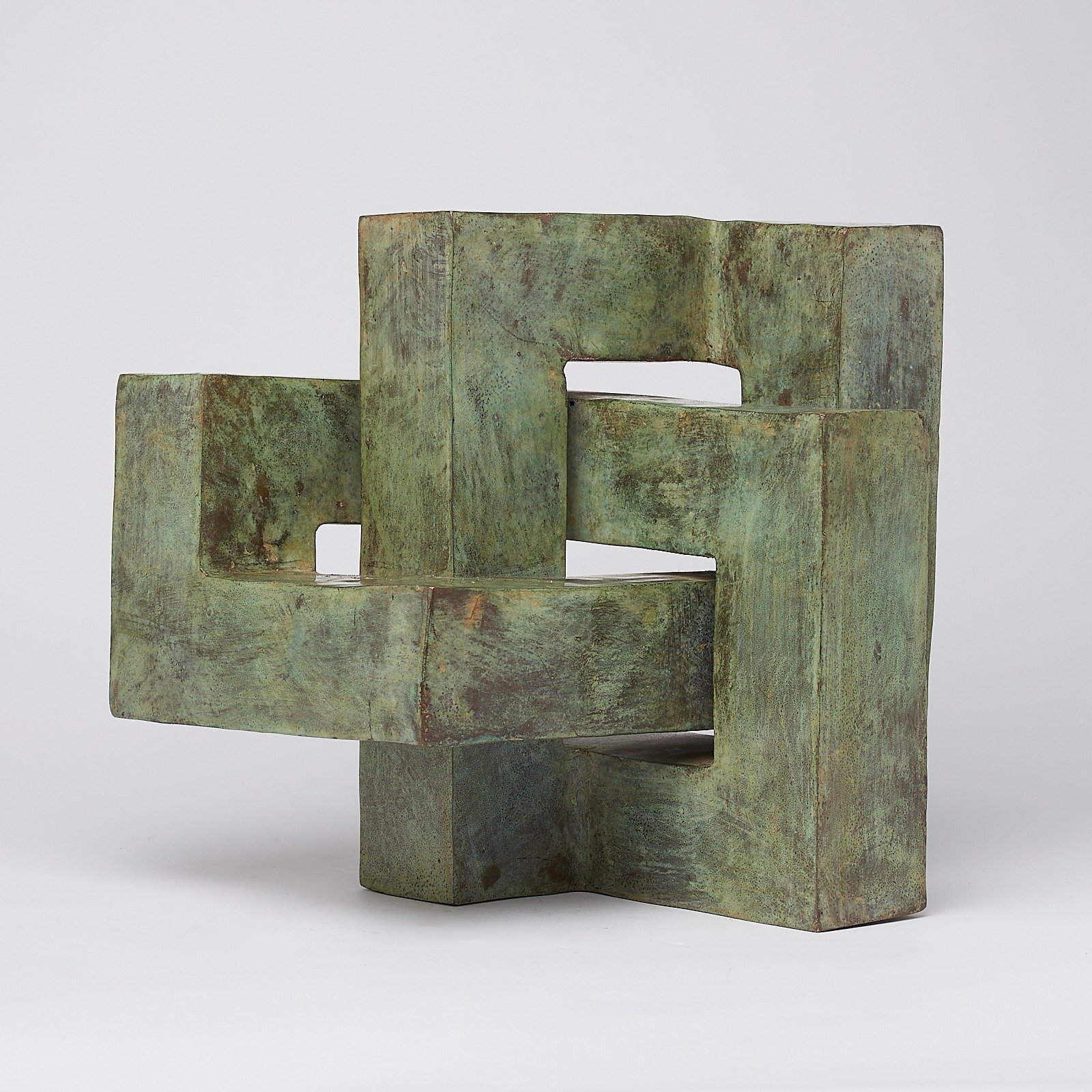
Vase - Patinated bronze


Holds a bachelor's degree in history of art and architecture, with 12 years of experience in decorative arts.
Catawiki Buyer Protection
Your payment’s safe with us until you receive your object.View details
Trustpilot 4.4 | 121899 reviews
Rated Excellent on Trustpilot.
Description from the seller
Material: Body in patinated bronze metal alloy) with a distinctive hammered and silver metal base.
• Dimensions: approx. 21 cm high × 18 cm wide (top opening).
• Shape: Domed structure, wavy cutout mouth and hammered hexagonal base.
• Decoration: Richly ornamented in relief with multiple coats of arms and heraldic shields (some identifiable as of European origin, possibly Portuguese or Spanish, others of generic heraldic inspiration). Stylized floral motifs appear between the shields.
• Technique: Casting and subsequent manual finishing with dark patina and golden highlights.
• Function:
• Most likely decorative, it could have been used as a cachepot (vase holder) or table centerpiece.
• Oxidized and worn interior, indicating use with plants or flowers.
Observations of historical/artistic value:
• The use of multiple heraldic shields suggests that the piece was made to extol noble or academic traditions, and may be associated with a decorative arts workshop linked to tourism or the historical revivalism of the time.
It was common in Portugal and Spain, between 1910 and 1930, to produce decorated bronze pieces with coats of arms.
Seller's Story
Material: Body in patinated bronze metal alloy) with a distinctive hammered and silver metal base.
• Dimensions: approx. 21 cm high × 18 cm wide (top opening).
• Shape: Domed structure, wavy cutout mouth and hammered hexagonal base.
• Decoration: Richly ornamented in relief with multiple coats of arms and heraldic shields (some identifiable as of European origin, possibly Portuguese or Spanish, others of generic heraldic inspiration). Stylized floral motifs appear between the shields.
• Technique: Casting and subsequent manual finishing with dark patina and golden highlights.
• Function:
• Most likely decorative, it could have been used as a cachepot (vase holder) or table centerpiece.
• Oxidized and worn interior, indicating use with plants or flowers.
Observations of historical/artistic value:
• The use of multiple heraldic shields suggests that the piece was made to extol noble or academic traditions, and may be associated with a decorative arts workshop linked to tourism or the historical revivalism of the time.
It was common in Portugal and Spain, between 1910 and 1930, to produce decorated bronze pieces with coats of arms.