No. 99871377

No. 99871377
Coiffeuse / Tocador Estilo Luis XV, marquetería floral, Napoleón III, s. XIX - Francia
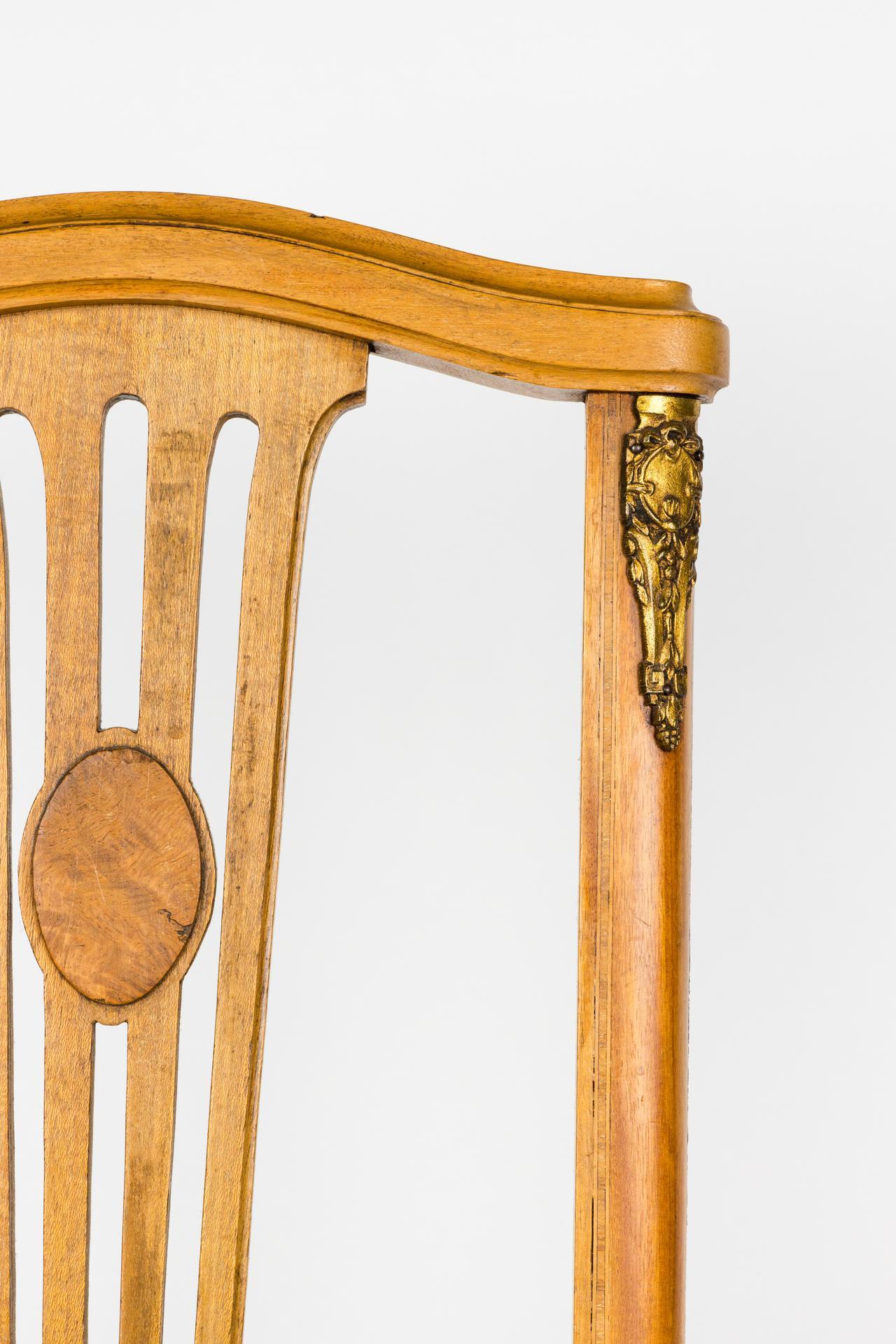
Exquisito poudreuse o tocador Estilo Luis XV realizado en la Francia de la época Napoleón III, del siglo XIX. Excelente factura, presenta extraordinaria marquetería de buena factura; se emplean diferentes maderas para los ornamentos, tanto poligonales como florales como. Este ligero tocador se levanta sobre cuatro patas galveadas, las dos delanteras con sabots. En su frente de perfil mixtilíneo presenta dos registros (pese a que parezcan cinco), así como una bandeja extraíble de escritura, con piel camel gofrada, convirtiéndolo así en un bureau o escritorio. Todas las guarniciones, incluidos los tiradores, son de bronce dorado al mercurio y después cincelado.
El sobre presenta decoraciones florales de gran delicadeza, gracias a la combinación de chapas de diferente tono. Es este sobre floral el que se levanta, en dos solapas laterales y una central, dejando al descubierto el magnifico tocador. Una vez abierto, en el medio se descubre un espejo y en los laterales, espacio de almacenaje. Es curioso que en el frente estos espacios han sido tratados como si fueran cajones, con tiradores.
Mobiliario ligero, práctico y versátil.
Más sobre el Estilo Luis XV
El Estilo Luis XV es un estilo artístico, especialmente presente en las artes decorativas, que se desarrolló durante el reinado de Luis XV (1715-1774). Inicialmente la denominación "Estilo Luis XV" se refería a un tipo característico de sillas, pero enseguida se extendió a todas las artes de la época. Este estilo fue creación de los ebanistas como resultado de un avance técnico mayor en la fabricación de muebles de madera. Se identifica con el estilo arquitectónico denominado Rococó. Al igual que el Rococó, cuenta con una profusa decoración y detallismo, en contraste con el posterior "Estilo Luis XVI", de tendencia más sencilla.
Estilo y época Napoleón III o Segundo Imperio
El estilo Napoleón III o Segundo Imperio recibe su nombre debido a que nació en Francia en aquel momento. Estrictamente, el Segundo Imperio fue proclamado en 1852 y terminó en 1870, dirigido por Luis Napoleón Bonaparte como emperador de los franceses, aunque en el sentido artístico se extiende unos años más (hasta 1880). Dicho estilo tuvo una gran acogida entre la burguesía francesa. El propio emperador estuvo involucrado en el desarrollo artístico del momento, aunque más ligado con la arquitectura. Sin embargo, es a la emperatriz Eugenia a quien se le debe la evolución de las artes decorativas.
Aunque se inspira en los estilos del pasado, empezando por la Antigüedad Clásica, el Renacimiento, incluso en el Luis XVI, muy querido por Eugenia, la característica más representativa del estilo es la suntuosidad y ostentación, aspirando siempre a mostrar la riqueza y opulencia.
No es un estilo diseñado específicamente para el Segundo Imperio, sino una recuperación de los diferentes grandes estilos franceses de los siglos anteriores, una especie de recopilación de las tendencias decorativas francesas. Se hace especial referencia al Luis XIV, Luis XV, Barroco y Rococó, y poco a poco el Luis XVI, de base eclecticista. En definitiva, los estilos decorativos que habían posicionado a Francia a la cabeza del interiorismo y diseño de mobiliario en Europa, tanto por calidad como por originalidad y belleza.
Son piezas con una gran ornamentación. Algo muy común era la aplicación de elementos que simulasen bronce, como en este caso el fileteado de latón. Las tapicerías también vivieron un momento de esplendor, ocultando casi por completo la estructura de las sillas y sillones. Se optó habitualmente por las maderas oscuras, o teñidas o lacadas en colores oscuros, que se armonizaban con las ricas tapicerías y los detalles en dorado.
El estilo pronto se expandió por otros países europeos, tomando otros nombres. En Reino Unido y sus colonias se conoce como estilo victoriano, aunque con algunas diferencias.
Dimensiones:
Cerrado: 76 x 78 x 43 cm
Abierto: 114 x 125 x 43 cm.
En los gastos de envío se incluye el embalaje profesional hecho a medida; y el envío personalizado, con número de seguimiento y garantía.
How to buy on Catawiki
1. Discover something special
2. Place the top bid
3. Make a secure payment