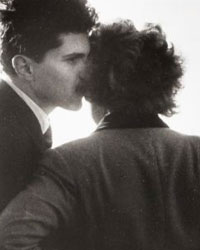
Maurice Tabard (1897-1984) - Hand, 1929


| €2 |
|---|
Catawiki Buyer Protection
Your payment’s safe with us until you receive your object.View details
Trustpilot 4.4 | 122713 reviews
Rated Excellent on Trustpilot.
Description from the seller
Author: Maurice Tabard (1897-1984)
Title: Hand, 1929
Image Size: 21,5x17 cm
Print size: 25.5x18,2 cm
Later Gelatin Silver Print probably printed in the late '90ies
On verso copyright The Art Institute of Chicago
Condition: Fine (see picture for details)
Shipping from European Union (UE)
Delivery with international tracking service
About the author: Born in Lyon, Maurice Tabard was destined for the violin, but naturally became a silk designer in a Lyon factory. In 1914, his father took him with him on a business trip to the United States. He enrolled him at the New York Institute of Photography and Tabard set up his first photography studio.
In 1928, he returned to France, became a fashion photographer for various magazines and obtained commissions for advertising. From then on, he began to study the components of a photograph: objects, their shapes, materials, lighting, formal connections rather than their appearance.
A set photographer in the early 1940s, he also made documentary films. In 1946, he returned to the United States where he divided his time between working for Harper’s Bazaar and teaching.
Seller's Story
Author: Maurice Tabard (1897-1984)
Title: Hand, 1929
Image Size: 21,5x17 cm
Print size: 25.5x18,2 cm
Later Gelatin Silver Print probably printed in the late '90ies
On verso copyright The Art Institute of Chicago
Condition: Fine (see picture for details)
Shipping from European Union (UE)
Delivery with international tracking service
About the author: Born in Lyon, Maurice Tabard was destined for the violin, but naturally became a silk designer in a Lyon factory. In 1914, his father took him with him on a business trip to the United States. He enrolled him at the New York Institute of Photography and Tabard set up his first photography studio.
In 1928, he returned to France, became a fashion photographer for various magazines and obtained commissions for advertising. From then on, he began to study the components of a photograph: objects, their shapes, materials, lighting, formal connections rather than their appearance.
A set photographer in the early 1940s, he also made documentary films. In 1946, he returned to the United States where he divided his time between working for Harper’s Bazaar and teaching.