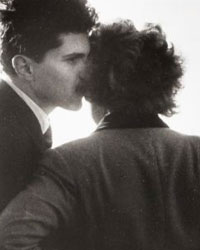
Matthew Houston - Jana - Unique 5x4" Polaroid


Über 35 Jahre Erfahrung; ehemaliger Galeriebesitzer und Kurator am Museum Folkwang.
| 3 € | ||
|---|---|---|
| 2 € | ||
| 1 € |
Käuferschutz auf Catawiki
Ihre Zahlung wird von uns sicher verwahrt, bis Sie Ihr Objekt erhalten.Details ansehen
Trustpilot 4.4 | 129200 Bewertungen
Auf Trustpilot als hervorragend bewertet.
Vom Verkäufer bereitgestellte Beschreibung
"Einzigartige 5×4 Zoll Polaroid"
Signed on the back.
The accompanying provenance paper is also signed and carries the studio stamp.
Very good condition
Not mounted - laid on museum board in archival mylar sleeve
In archival box
Shipped flat with rigid protection by registered mail.
This Polaroid is very high quality with fine detail - made of course during the photoshoot so by definition a 'vintage print'. The Polaroid material is the paper based first generation Polaroid known as 'peel-apart' Polaroid and available in 10x8", 5x4" and 3x4" format until the early 2000s when it was discontinued. Not to be confused with the 'integral' material now being manufactured by Polaroid Originals. This is a 'Type 55' print and has the coating which was supplied with the film. The coating was designed to protect the fine silver image and put on immediately after the image appeared.
Matthew Houston (London 1961) best known for the Catalogue of Chaos series - an in depth exploration of the materials and processes of photography.
This is one of a series of Polaroids and silver gelatine prints begun in the late 1990s.
"Matthew Houston studied printmaking at the Central School of Art, London, and later earned a First Class degree in photography from the London College of Printing. He began photographing models, actors, and dancers on a small stage he built while running a cabaret on a sailing ship. This stage was the setting for many of his large-format photographs and Polaroids in the late 1990s. Houston notes that the stage itself suggested the inclusion of a person and acted as a pedestal for his subjects. His photographs are known for their intimate often nostalgic qualities and are the result of an "open experiment" with his subjects. He focuses on finding common ground with the model and capturing what happens naturally. His photographs sometimes include subtle references to mythological figures and paintings. This is not meant to be a fixed theme, but a "gentle reference" that emerged from the stage-like setting of his early portraits."*
*From exhibition catalogue, London 2014
"The little stage I built was part of the studio and I began to make photographs of performers, friends, actors and models. Using Polaroid film gave the material a chance to be part of the picture as well. Polaroid is known for all kinds of quirks and accidents that are a reminder of process. As with other photographs I've made I feel it important that material and process are still included, still evident.”**
**From interview - Saatch Art
An excerpt from an exhibition review I discovered - BIP off, Liege - by Philippe Herbert
"Parcours atypique : ancien propriétaire d’un cabaret, il photographie depuis l’âge de 7 ans mais il a commencé cette série à 38 ans. Sur une scène improvisée, il photographie au Polaroïd grand format des femmes dénudées avec beaucoup de tendresse. Il renouvelle le genre du nu."
"Einzigartige 5×4 Zoll Polaroid"
Signed on the back.
The accompanying provenance paper is also signed and carries the studio stamp.
Very good condition
Not mounted - laid on museum board in archival mylar sleeve
In archival box
Shipped flat with rigid protection by registered mail.
This Polaroid is very high quality with fine detail - made of course during the photoshoot so by definition a 'vintage print'. The Polaroid material is the paper based first generation Polaroid known as 'peel-apart' Polaroid and available in 10x8", 5x4" and 3x4" format until the early 2000s when it was discontinued. Not to be confused with the 'integral' material now being manufactured by Polaroid Originals. This is a 'Type 55' print and has the coating which was supplied with the film. The coating was designed to protect the fine silver image and put on immediately after the image appeared.
Matthew Houston (London 1961) best known for the Catalogue of Chaos series - an in depth exploration of the materials and processes of photography.
This is one of a series of Polaroids and silver gelatine prints begun in the late 1990s.
"Matthew Houston studied printmaking at the Central School of Art, London, and later earned a First Class degree in photography from the London College of Printing. He began photographing models, actors, and dancers on a small stage he built while running a cabaret on a sailing ship. This stage was the setting for many of his large-format photographs and Polaroids in the late 1990s. Houston notes that the stage itself suggested the inclusion of a person and acted as a pedestal for his subjects. His photographs are known for their intimate often nostalgic qualities and are the result of an "open experiment" with his subjects. He focuses on finding common ground with the model and capturing what happens naturally. His photographs sometimes include subtle references to mythological figures and paintings. This is not meant to be a fixed theme, but a "gentle reference" that emerged from the stage-like setting of his early portraits."*
*From exhibition catalogue, London 2014
"The little stage I built was part of the studio and I began to make photographs of performers, friends, actors and models. Using Polaroid film gave the material a chance to be part of the picture as well. Polaroid is known for all kinds of quirks and accidents that are a reminder of process. As with other photographs I've made I feel it important that material and process are still included, still evident.”**
**From interview - Saatch Art
An excerpt from an exhibition review I discovered - BIP off, Liege - by Philippe Herbert
"Parcours atypique : ancien propriétaire d’un cabaret, il photographie depuis l’âge de 7 ans mais il a commencé cette série à 38 ans. Sur une scène improvisée, il photographie au Polaroïd grand format des femmes dénudées avec beaucoup de tendresse. Il renouvelle le genre du nu."