Nr. 106678751

Verkauft
Vase - Porzellan - China - Große Studiovase  (Ohne mindestpreis)
Höchstgebot
€ 71
Ohne mindestpreis
Vor 4 h

Vase - Porzellan - China - Große Studiovase (Ohne mindestpreis)

Grande portapennelli cilindrico (Bitong) in porcellana policroma – Cina, Epoca della Repubblica (datazione ciclica: autunno 1939) – Firmato dall'artista Yu Huanshun (余煥順) Large Chinese Polychrome Porcelain Cylindrical Brush Pot (Bitong) – Republic Period (Dated Autumn 1939) – Signed by Artist Yu Huanshun (余煥順) Importante vaso cilindrico da scrivania (portapennelli / bitong) in porcellana cinese a pasta bianca e dura, interamente cavo all'interno. La superficie esterna è decorata a smalti policromi sopra vetrina (stile wucai / Famiglia Verde) e rifiniture in oro. Soggetto decorativo:Il decoro raffigura il tema tradizionale del Bogu tu (noto come "Cento Antichità" o "Cento Tesori"), che include arredi da studio e simboli del letterato disposti in modo asimmetrico: un grande vaso con peonie (simbolo di nobiltà), un bruciaincense tripode (ding) con scettro cerimoniale ruyi, scatole ed elementi del gioco degli scacchi cinesi (xiangqi), libri e rotoli legati, e corni di rinoceronte incrociati alla base. Il bordo superiore è rifinito con una banda dorata a imitazione dei bronzi antichi. Iscrizione e Firma: Sul retro è presente un'iscrizione poetica in blu cobalto sotto vetrina eseguita in caratteri corsivi (caoshu). Il testo si traduce come segue:“Le antichità sono degne di essere considerate tesori”.Segue l'indicazione della datazione ciclica: anno Jimao, secondo mese d'autunno (corrispondente al settembre/ottobre del 1939).Localizzazione della bottega artistica: Zhushan (Collina delle Perle, polo artistico di Jingdezhen).Firma dell'autore: Yu Huanshun (余煥順), corredata dal relativo sigillo rosso dipinto. Marchio alla base:La base inferiore presenta un marchio apocrifo di rispetto a sei caratteri in rosso ferro stampato, racchiuso in un doppio quadrato, riferibile all'Imperatore Qianlong ("Da Qing Qianlong Nian Zhi"). L'oggetto è una produzione autentica dell'Epoca della Repubblica (1939), conforme alla prassi manifatturiera coeva di apporre marchi imperiali storici. Dimensioni:Altezza: 29,0 cmDiametro: 13,0 cm Condizioni e Note: L'oggetto si presenta integro nella struttura, senza sbeccature, crepe o restauri visibili al corpo. Si segnala una leggera e naturale usura della doratura lungo il profilo del bordo superiore. Sul retro, sul lato della calligrafia, è presente una colatura verticale di colore giallastro dovuta a un residuo di sostanza esterna superficiale (probabile residuo di vecchia cera o adesivo d'epoca), rimovibile con adeguata pulizia conservativa. An important Chinese porcelain cylindrical scholar’s desk vessel (brush pot / bitong) made of hard-paste white porcelain, entirely hollowed. The exterior surface is finely decorated in overglaze polychrome enamels (in the wucai / Famille Verte palette) with gilt highlights. Decorative Subject: The decoration depicts the traditional Bogu tu motif (known as "One Hundred Antiques" or "Hundred Treasures"), featuring an asymmetrical arrangement of scholar's objects and auspicious symbols: a large vase holding flourishing peonies (signifying nobility), a tripod incense burner (ding) alongside a ceremonial ruyi scepter, boxes and components for the Chinese chess game (xiangqi), tied books and scrolls, and crossed rhinoceros horns near the base. The upper rim is finished with a gilded border mimicking archaic bronzes. Inscription and Signature:The reverse side features a poem written in underglaze cobalt blue running script (caoshu). The vertical columns read as follows:“Antiques are worthy of being treasured” (the title of the piece). Cyclical date indication: Jimao year, second month of autumn (corresponding to September/October 1939).Location of the artistic workshop: Zhushan (Pearl Hill, the famous artistic hub of Jingdezhen). Artist's signature: Yu Huanshun (余煥順), accompanied by his painted red iron-red seal.Base Mark:The recessed base features an apocryphal six-character iron-red stamped seal mark enclosed in a double square, referencing Emperor Qianlong ("Da Qing Qianlong Nian Zhi"). The object is an authentic production of the Republic Period (1939), consistent with the standard practice of the era to apply earlier imperial honorific marks. Dimensions:Height: 29.0 cmDiameter: 13.0 cm Condition Report:The piece is structurally intact, with no chips, cracks, hairlines, or visible restorations to the body. Minor and natural wear to the gilding along the upper rim is present, consistent with age. On the reverse side, next to the calligraphy, there is a vertical yellowish streak caused by an external surface residue (likely old wax or adhesive), which can be removed with gentle conservation cleaning.

Nr. 106678751

Verkauft
Vase - Porzellan - China - Große Studiovase  (Ohne mindestpreis)

Vase - Porzellan - China - Große Studiovase (Ohne mindestpreis)

Grande portapennelli cilindrico (Bitong) in porcellana policroma – Cina, Epoca della Repubblica (datazione ciclica: autunno 1939) – Firmato dall'artista Yu Huanshun (余煥順)

Large Chinese Polychrome Porcelain Cylindrical Brush Pot (Bitong) – Republic Period (Dated Autumn 1939) – Signed by Artist Yu Huanshun (余煥順)

Importante vaso cilindrico da scrivania (portapennelli / bitong) in porcellana cinese a pasta bianca e dura, interamente cavo all'interno.
La superficie esterna è decorata a smalti policromi sopra vetrina (stile wucai / Famiglia Verde) e rifiniture in oro.
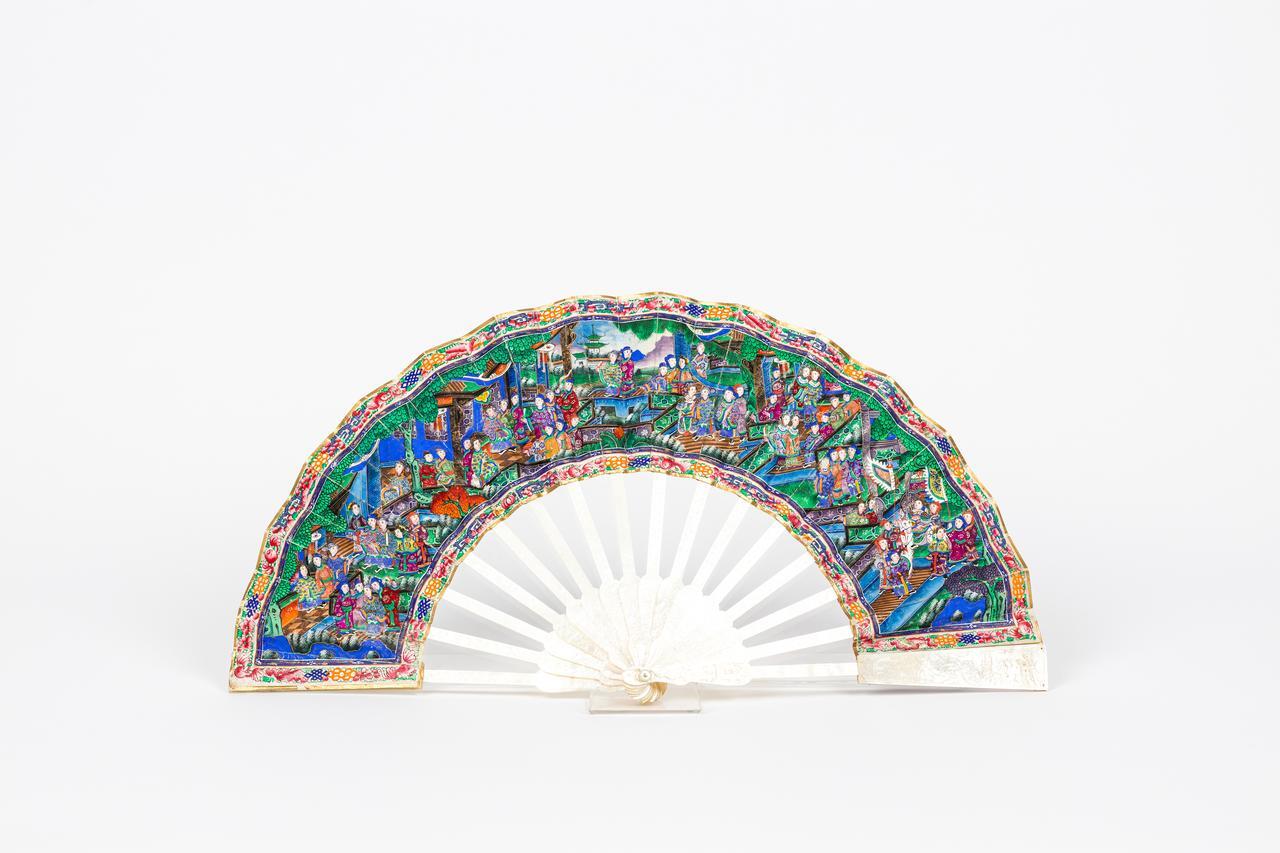
Soggetto decorativo:Il decoro raffigura il tema tradizionale del Bogu tu (noto come "Cento Antichità" o "Cento Tesori"), che include arredi da studio e simboli del letterato disposti in modo asimmetrico: un grande vaso con peonie (simbolo di nobiltà), un bruciaincense tripode (ding) con scettro cerimoniale ruyi, scatole ed elementi del gioco degli scacchi cinesi (xiangqi), libri e rotoli legati, e corni di rinoceronte incrociati alla base.
Il bordo superiore è rifinito con una banda dorata a imitazione dei bronzi antichi.

Iscrizione e Firma:
Sul retro è presente un'iscrizione poetica in blu cobalto sotto vetrina eseguita in caratteri corsivi (caoshu). Il testo si traduce come segue:“Le antichità sono degne di essere considerate tesori”.Segue l'indicazione della datazione ciclica: anno Jimao, secondo mese d'autunno (corrispondente al settembre/ottobre del 1939).Localizzazione della bottega artistica: Zhushan (Collina delle Perle, polo artistico di Jingdezhen).Firma dell'autore: Yu Huanshun (余煥順), corredata dal relativo sigillo rosso dipinto.
Marchio alla base:La base inferiore presenta un marchio apocrifo di rispetto a sei caratteri in rosso ferro stampato, racchiuso in un doppio quadrato, riferibile all'Imperatore Qianlong ("Da Qing Qianlong Nian Zhi").
L'oggetto è una produzione autentica dell'Epoca della Repubblica (1939), conforme alla prassi manifatturiera coeva di apporre marchi imperiali storici.
Dimensioni:Altezza: 29,0 cmDiametro: 13,0 cm
Condizioni e Note:
L'oggetto si presenta integro nella struttura, senza sbeccature, crepe o restauri visibili al corpo. Si segnala una leggera e naturale usura della doratura lungo il profilo del bordo superiore. Sul retro, sul lato della calligrafia, è presente una colatura verticale di colore giallastro dovuta a un residuo di sostanza esterna superficiale (probabile residuo di vecchia cera o adesivo d'epoca), rimovibile con adeguata pulizia conservativa.

An important Chinese porcelain cylindrical scholar’s desk vessel (brush pot / bitong) made of hard-paste white porcelain, entirely hollowed.
The exterior surface is finely decorated in overglaze polychrome enamels (in the wucai / Famille Verte palette) with gilt highlights.
Decorative Subject:
The decoration depicts the traditional Bogu tu motif (known as "One Hundred Antiques" or "Hundred Treasures"), featuring an asymmetrical arrangement of scholar's objects and auspicious symbols: a large vase holding flourishing peonies (signifying nobility), a tripod incense burner (ding) alongside a ceremonial ruyi scepter, boxes and components for the Chinese chess game (xiangqi), tied books and scrolls, and crossed rhinoceros horns near the base. The upper rim is finished with a gilded border mimicking archaic bronzes.
Inscription and Signature:The reverse side features a poem written in underglaze cobalt blue running script (caoshu). The vertical columns read as follows:“Antiques are worthy of being treasured” (the title of the piece).
Cyclical date indication: Jimao year, second month of autumn (corresponding to September/October 1939).Location of the artistic workshop: Zhushan (Pearl Hill, the famous artistic hub of Jingdezhen).
Artist's signature: Yu Huanshun (余煥順), accompanied by his painted red iron-red seal.Base Mark:The recessed base features an apocryphal six-character iron-red stamped seal mark enclosed in a double square, referencing Emperor Qianlong ("Da Qing Qianlong Nian Zhi").
The object is an authentic production of the Republic Period (1939), consistent with the standard practice of the era to apply earlier imperial honorific marks.
Dimensions:Height: 29.0 cmDiameter: 13.0 cm
Condition Report:The piece is structurally intact, with no chips, cracks, hairlines, or visible restorations to the body. Minor and natural wear to the gilding along the upper rim is present, consistent with age. On the reverse side, next to the calligraphy, there is a vertical yellowish streak caused by an external surface residue (likely old wax or adhesive), which can be removed with gentle conservation cleaning.

Höchstgebot
€ 71
Ohne mindestpreis

Ähnliche Objekte

Für Sie aus der Kategorie

Chinesische Kunst

Suchalarm einrichten
Richten Sie einen Suchalarm ein, um benachrichtigt zu werden, sobald neue passende Objekte verfügbar sind.

Dieses Objekt wurde vorgestellt in:


So kaufen Sie auf Catawiki

Mehr zum Käuferschutz erfahren

      1. Etwas Besonderes entdecken

      Entdecken Sie in unseren Auktionen Tausende von besonderen Objekten, die von Experten ausgewählt wurden. Sehen Sie sich die Fotos, die ausführliche Beschreibung und den Schätzwert der besonderen Objekte an, die Sie interessieren. 

      2. Höchstgebot abgeben

      Finden Sie etwas, das Sie begeistert, und geben Sie das Höchstgebot ab. Sie können die Auktion bis zum Schluss mitverfolgen oder unser System für Sie bieten lassen. Dazu müssen Sie einfach nur den Maximalbetrag eingeben, den Sie für das jeweilige Objekt ausgeben möchten. 

      3. Sichere Zahlung durchführen

      Bezahlen Sie Ihr besonderes Objekt und wir verwahren Ihre Zahlung, bis Ihr Objekt unversehrt bei Ihnen angekommen ist. Wir wickeln alle Transaktionen mit einem zuverlässigen und sicheren Zahlungssystem ab. 

Haben Sie etwas Ähnliches zu verkaufen?

Unabhängig davon, ob Online-Auktionen Neuland für Sie sind oder ob Sie gewerblich verkaufen – wir helfen Ihnen, mehr mit Ihren besonderen Objekten zu verdienen.

Objekt verkaufen