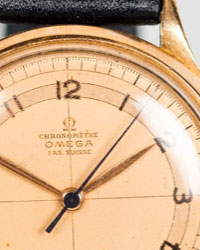
Omega - Seamaster - Ohne mindestpreis - Herren - 1960-1969


06
Tage
03
Stunden
04
Minuten
06
Sekunden
Aktuelles Gebot
€ 99
Ohne mindestpreis

Experte
Von Erwin Dekker ausgewählt
Erfahrener Antiquitätenhändler mit umfangreicher Expertise in Uhren und Antiquitätensammlung.
Schätzung € 700 - € 800
 | 99 € | |
|---|---|---|
 | 1 € |
Käuferschutz auf Catawiki
Ihre Zahlung wird von uns sicher verwahrt, bis Sie Ihr Objekt erhalten.Details ansehen
Trustpilot 4.4 | 144785 Bewertungen
Auf Trustpilot als hervorragend bewertet.
Diese Omega Seamaster aus den 1960er-Jahren ist eine Automatikuhr für Herren mit einem 35-mm-vergoldeten Gehäuse und silbernem Zifferblatt.
KI-gestützte Zusammenfassung
Vom Verkäufer bereitgestellte Beschreibung
Omega Seamaster Automatic Date – Gold Plated – Silver Dial – 35 mm – Vintage Swiss Watch
An elegant vintage Swiss timepiece from one of the most celebrated names in watchmaking, this Omega Seamaster Automatic combines timeless design, traditional mechanical engineering and the distinctive character of classic Omega craftsmanship.
Featuring a beautifully proportioned 35 mm gold-plated case, a refined silver dial with applied hour markers, elegant gold-toned hands and a practical date display at 3 o'clock, this watch reflects the understated sophistication of vintage Swiss horology.
Powered by an authentic Swiss Omega automatic mechanical movement, this Seamaster represents an appealing combination of everyday practicality, classical elegance and enduring watchmaking heritage.
Its warm gold-toned case, silver dial and contrasting black leather strap create a sophisticated appearance, making it an attractive choice for collectors and enthusiasts of traditional mechanical watches.
Technical Details
Brand: Omega
Model: Seamaster Automatic Date
Origin: Switzerland – Swiss Made
Case: Gold-plated case with a brushed finish and polished details
Diameter: 35 mm, excluding the crown
Crystal: Original Omega acrylic crystal
Dial: Silver dial with a subtle sunburst-style finish, applied metallic hour markers and the Omega logo positioned beneath 12 o'clock
Hour Markers: Applied faceted metallic baton indexes with distinctive detailing
Hands: Gold-toned hour and minute hands with a slender central seconds hand
Movement: Swiss Omega automatic mechanical movement
Winding: Automatic self-winding mechanical system
Functions: Hours, minutes, central seconds and date
Calendar: Date aperture positioned at 3 o'clock, framed by a metallic border
Date Adjustment: Non-quickset date mechanism. The date changes automatically around midnight as the hands pass through 12 o'clock. There is no independent quickset date adjustment.
Bezel: Smooth gold-toned bezel surrounding the acrylic crystal
Crown: Gold-toned crown positioned at 3 o'clock
Case Design: Classic vintage Omega case with angular lugs and elegant gold-plated construction
Water Resistance: Not tested. Water resistance cannot be guaranteed.
Strap: Generic black leather strap with matching stitching
Wrist Size: Suitable for a wrist of approximately 20–21 cm
Accessories: Supplied with a generic presentation box
Condition Report
Grade B+ – Very good vintage condition, with visible signs of age and wear consistent with its history.
The watch presents an attractive overall appearance, retaining the distinctive elegance and character associated with vintage Omega Seamaster models.
The gold-plated case displays light surface scratches, minor marks and signs of previous use, particularly around the case edges and lugs.
The brushed gold-toned finish remains visually appealing, while the polished bezel provides an elegant contrast to the silver dial.
The silver dial retains its original vintage character, with visible small spots, minor marks and areas of natural ageing distributed across its surface.
These imperfections are particularly noticeable around the upper and lower sections of the dial and are consistent with the passage of time.
The applied metallic hour markers and Omega logo remain clearly visible, preserving the classic appearance of the watch.
The gold-toned hands complement the warm colour of the case, while the slender central seconds hand maintains the traditional three-hand configuration.
The date aperture at 3 o'clock remains an important visual and functional feature of the dial.
The original Omega acrylic crystal retains the characteristic appearance of vintage watch crystals and may display fine surface marks associated with previous use.
The generic black leather strap provides an elegant contrast to the gold-plated case and accommodates a wrist of approximately 20–21 cm.
The watch is fitted with a Swiss Omega automatic mechanical movement.
The date mechanism does not feature a quickset function. Date advancement occurs as the hands pass through midnight, in accordance with the traditional calendar construction of this movement.
The movement's long-term accuracy, power reserve and service history have not been independently verified.
As with any vintage mechanical timepiece, a professional inspection or routine servicing may be advisable to ensure continued reliable performance.
The watch is supplied with a generic presentation box.
Please examine the photographs carefully, as they form an essential part of the condition description and provide the most accurate representation of the watch's cosmetic appearance.
Although the Seamaster collection has a historical association with water-resistant watchmaking, the water resistance of this particular vintage example has not been tested.
Contact with water should therefore be avoided unless the watch has been professionally inspected, pressure-tested and appropriately resealed.
Story & Heritage
Omega – A Legacy of Swiss Watchmaking Excellence
Few names in Swiss horology possess the historical significance and international recognition of Omega.
The company's origins date back to 1848, when Louis Brandt established a watchmaking workshop in La Chaux-de-Fonds, Switzerland.
Initially dedicated to the assembly and production of precision pocket watches, the business gradually developed into one of the most influential manufacturers in the Swiss watchmaking industry.
During the following decades, Omega became associated with technical innovation, precision engineering and the development of increasingly sophisticated mechanical movements.
The introduction of the famous Omega calibre in 1894 represented an important milestone in the company's history.
Its advanced construction and interchangeable components helped establish new standards for industrialised Swiss watch production.
The success of this movement eventually contributed to the adoption of the Omega name as the company's principal identity.
Throughout the 20th century, Omega strengthened its reputation through precision competitions, sporting timekeeping, military watches and the development of numerous important wristwatch collections.
Among these collections, the Seamaster would become one of the most recognisable and enduring.
The Birth of the Omega Seamaster
The Omega Seamaster collection was introduced in 1948, coinciding with the company's centenary.
Its development drew upon Omega's experience producing robust wristwatches for military use during the Second World War.
The early Seamaster models were designed to combine reliable mechanical performance with improved resistance to moisture and everyday environmental conditions.
Unlike many later professional diving watches, the original Seamaster models were elegant and versatile wristwatches intended for daily wear.
Their designs featured balanced cases, refined dials and practical mechanical movements.
This combination of durability and sophistication helped establish the Seamaster as one of Omega's most successful collections.
Over the decades, the Seamaster family expanded to include numerous interpretations, ranging from classical dress-oriented models to professional diving instruments.
Vintage automatic Seamaster watches remain particularly appreciated for their elegant proportions, traditional Swiss movements and timeless appearance.
This example reflects the refined aesthetic of the collection's classic mechanical era.
The Elegance of Vintage Gold-Plated Watches
Gold-toned wristwatches occupy an important place in the history of mid-20th-century watchmaking.
During this period, gold-plated cases offered the luxurious appearance of precious-metal watches while remaining more accessible than solid-gold examples.
Swiss manufacturers frequently combined gold-plated cases with silver, champagne or cream-coloured dials to create elegant and versatile timepieces.
The result was a distinctive style that balanced sophistication with everyday practicality.
This Omega Seamaster follows that tradition through its warm gold-plated case and understated silver dial.
The 35 mm diameter reflects the classical proportions favoured during much of the vintage mechanical watch era.
Compared with many contemporary wristwatches, these dimensions offer a more restrained and elegant wrist presence.
The angular lugs add visual character, while the smooth bezel creates a harmonious transition between the case and the dial.
The brushed surfaces introduce a subtle texture that contrasts with the polished elements.
Together, these details give the watch an appearance that remains attractive decades after its original production period.
The Beauty of the Silver Dial
One of the most appealing features of this Omega Seamaster is its silver dial.
Its restrained composition reflects the traditional principles of Swiss watch design, where legibility, proportion and elegance were considered essential.
The applied Omega logo and carefully positioned lettering create a balanced arrangement beneath the 12 o'clock marker.
The Seamaster signature appears in its characteristic script above the 6 o'clock position, reinforcing the identity of the collection.
The applied metallic hour markers provide subtle depth and reflect light differently depending on the viewing angle.
The slender gold-toned hands complement the warm finish of the case.
A discreet date window at 3 o'clock introduces an additional practical function without disturbing the overall balance of the dial.
The silver surface displays visible signs of natural ageing, including small spots and minor marks.
For many vintage watch enthusiasts, these traces of time form part of the individual character of an older mechanical wristwatch.
Rather than presenting the uniform appearance of a modern replacement dial, the surface reflects the passage of years and the history of the watch.
This combination of classical design and visible vintage character contributes to the distinctive appeal of the piece.
Omega Automatic – Traditional Mechanical Engineering
At the heart of this Seamaster is a Swiss Omega automatic mechanical movement.
Automatic movements represent an important development in the evolution of wristwatch technology.
Unlike manually wound watches, which require the wearer to wind the mainspring regularly through the crown, automatic movements incorporate a rotating weight known as a rotor.
As the wearer moves their wrist, the rotor transfers energy through the winding mechanism to the mainspring.
This stored mechanical energy powers the movement.
The regulating system then controls the release of energy, allowing the hands to advance and display the time.
Omega developed numerous automatic calibres throughout the 20th century, establishing a strong reputation for dependable mechanical engineering.
These movements were designed to combine precision, practical construction and everyday convenience.
The automatic winding system became particularly popular as wristwatches evolved into essential accessories for daily life.
This Seamaster preserves the appeal of traditional mechanical timekeeping, offering an alternative to modern electronic watches.
The movement operates through a carefully coordinated system of gears, springs and regulating components, reflecting the craftsmanship and engineering principles associated with Swiss horology.
The Traditional Non-Quickset Date Mechanism
An interesting feature of this Omega Seamaster is its traditional calendar mechanism.
The watch displays the date through a framed aperture positioned at 3 o'clock.
Unlike many modern mechanical watches, this movement does not incorporate an independent quickset date adjustment.
Instead, the calendar advances through the normal operation of the movement as the hands pass through midnight.
This construction is characteristic of numerous vintage automatic watches produced before quickset calendar mechanisms became widespread.
The absence of a quickset function reflects the mechanical design philosophy of an earlier generation of watchmaking.
For collectors, such details provide an interesting connection to the evolution of automatic calendar movements.
The date indication adds everyday practicality while preserving the classical simplicity of the dial.
The Original Omega Acrylic Crystal
The watch is fitted with its original Omega acrylic crystal.
Acrylic crystals were widely used by Swiss watch manufacturers during the vintage mechanical watch era.
They offered several practical advantages, including relatively low weight and resistance to shattering compared with conventional glass.
Their gently curved surfaces also contributed to the distinctive appearance of classical wristwatches.
Under certain lighting conditions, an acrylic crystal can create subtle optical distortions near the edges of the dial, giving vintage watches a visual character that differs from modern flat sapphire crystals.
Acrylic is generally more susceptible to surface scratches than sapphire, but many light marks can be polished by a qualified watchmaker.
The presence of the original Omega acrylic crystal contributes to the period-correct appearance of this Seamaster.
The Seamaster as a Symbol of Everyday Elegance
The enduring success of the Seamaster collection is closely connected to its ability to combine technical watchmaking with versatile design.
Although the name is strongly associated today with professional diving watches, many early Seamaster models were conceived as elegant everyday timepieces.
They were intended to accompany their owners through professional activities, social occasions and daily routines.
Their balanced proportions and understated dials made them suitable for a wide range of settings.
This gold-plated Omega Seamaster reflects that original philosophy.
Its 35 mm case provides classical proportions, while the silver dial and gold-toned details create a sophisticated visual identity.
The black leather strap reinforces its traditional character.
The watch can be appreciated as a vintage dress watch, a historical example of Swiss automatic watchmaking or a collectible piece from one of Omega's most important collections.
Collector Appeal and Vintage Character
Vintage Omega Seamaster watches continue to attract collectors because of their historical importance, mechanical construction and recognisable design.
The combination of an automatic Omega movement, a traditional calendar mechanism, original acrylic crystal and classical gold-plated case gives this example several appealing characteristics.
Its silver dial retains visible signs of age, contributing to the individual character of the watch.
The applied hour markers, elegant hands and traditional Seamaster signature reflect the understated design language associated with Omega's vintage mechanical collections.
The 35 mm case offers proportions that remain particularly attractive to enthusiasts of classical wristwatches.
The non-quickset date mechanism provides an additional connection to the history of mechanical calendar complications.
Its Grade B+ condition, together with the visible traces of previous use, reflects the character of a genuine vintage timepiece.
For enthusiasts who appreciate the heritage of Swiss mechanical watchmaking, this Seamaster offers an appealing combination of elegance, technical tradition and historical significance.
More than simply a wristwatch, it represents a connection to an era when mechanical precision, restrained design and enduring craftsmanship defined the art of Swiss horology.
A distinguished vintage Omega Seamaster that combines the warmth of a gold-plated case, the elegance of a silver dial and the enduring charm of traditional Swiss automatic watchmaking.
Internal Reference Number -VER-45
Details
Marke
Omega
Geschlecht
Herren
Modell
Seamaster
Material Uhrenarmband
Leder
Versicherter Versand
Ja
Länge Uhrenarmband
Normal (180–200 mm)
Periode
1960-1969
Neu lackiertes Zifferblatt
Nein
Uhrwerk
Automatik
Zifferblattfarbe
Silber
Material des Gehäuses
Vergoldet
Inklusive Originalverpackung
Nein
Inklusive Originalpapiere
Nein
Gehäusedurchmesser
35 mm
Inklusive Originalgarantie
Nein
Zustand
Gut – sichtbare Verschleißerscheinungen
Verkauft von