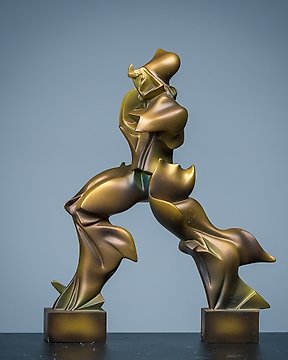
Bust, Poseidone (Nettuno) - 31 cm - Resin, Stone


Add to your favourites to get an alert when the auction starts.
Catawiki Buyer Protection
Your payment’s safe with us until you receive your object.View details
Trustpilot 4.4 | 127619 reviews
Rated Excellent on Trustpilot.
Description from the seller
Bust in resin and stone depicting Neptune (Poseidon)
This bust represents Neptune (Poseidon in Greek mythology), the mighty god of the sea, earthquakes, and horses. His classical iconography includes the characteristic flowing beard and curly hair that symbolize the ocean waves. Sculptural representations of Neptune have been popular since antiquity, with renewed interest during the Renaissance and the neoclassical period, when they became essential decorative elements in European aristocratic homes.
These decorative busts in resin and stone are particularly appreciated by fans of classical mythology, collectors of decorative art, interior designers seeking statement pieces with neoclassical inspiration, and by those who want to add a touch of classical elegance to living spaces. Their charm lies in their accessibility compared with pure marble sculptures, while still maintaining a refined aesthetic and alluding to Greco-Roman culture. They represent a decorative choice that unites history, mythology, and contemporary design.
Bust in resin and stone depicting Neptune (Poseidon)
This bust represents Neptune (Poseidon in Greek mythology), the mighty god of the sea, earthquakes, and horses. His classical iconography includes the characteristic flowing beard and curly hair that symbolize the ocean waves. Sculptural representations of Neptune have been popular since antiquity, with renewed interest during the Renaissance and the neoclassical period, when they became essential decorative elements in European aristocratic homes.
These decorative busts in resin and stone are particularly appreciated by fans of classical mythology, collectors of decorative art, interior designers seeking statement pieces with neoclassical inspiration, and by those who want to add a touch of classical elegance to living spaces. Their charm lies in their accessibility compared with pure marble sculptures, while still maintaining a refined aesthetic and alluding to Greco-Roman culture. They represent a decorative choice that unites history, mythology, and contemporary design.