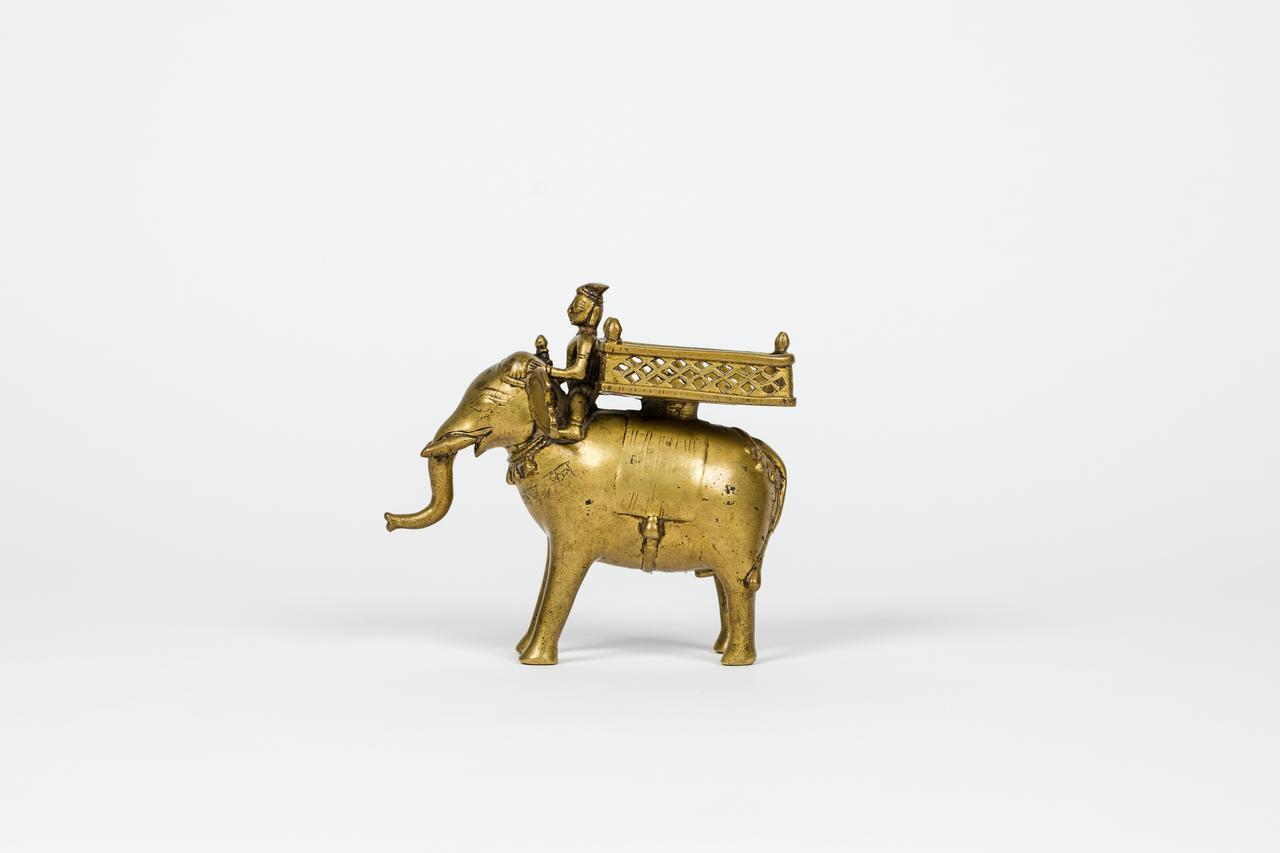
Fireplace accessory - Metal

04
days
12
hours
36
minutes
57
seconds
Starting bid
€ 1
No reserve price
No bids placed

Catawiki Buyer Protection

Your payment’s safe with us until you receive your object.View details

Trustpilot 4.4 | 130478 reviews

Rated Excellent on Trustpilot.

Description from the seller

Dolch (Janbiya/Schubia) with ornamental metal mounting – North African craftsmanship (Morocco/Maghreb, 20th century)
Detailed object identification and technical specifications

The present object is a bladed weapon in the form of a curved dagger, typologically belonging to the group of North African janbiya (locally called schubia or koummya). Such pieces are characteristic components of traditional attire in the Maghreb, especially in Morocco.

Materiality: The mounting (grip and sheath) consists of a metal alloy, visually suggesting gilded brass or a tin-zinc alloy. The lack of punch marks in the photos implies production in the realm of high-quality handicraft for the upscale souvenir or local jewelry market. The blade is made of steel.

Dimensions: * Total length (in sheath): ca. 37 cm.

Width of the sheath (bottom): ca. 12 cm (measured along the curve).

Blade shape: Single-edged, slightly curved blade that narrows toward the tip (Ort).

Physical condition: The grip is solidly worked and features the typical fan-shaped pommel plate. The sheath is strongly curved and ends in a characteristic button-like terminus (Ortband). Two rings on the sheath originally served to attach a cord (silk sash).

Analysis of craftsmanship ( Ornamentation and style)

The artistic quality of this object is characterized by a comprehensive, chased and filigree ornamentation deeply rooted in Islamic formal language:

Floral motifs: The grip and sheath are decorated with repetitive flower- and vine-patterns (arabesques). The circular rosettes on the pommel and the mouthpiece of the sheath are typical of Moroccan silversmithing from regions such as Tiznit or the Anti-Atlas.

Geometric symmetry: The distribution of ornaments follows strict symmetry, with surfaces divided by smooth decorative strips to guide the eye despite the abundance of detail.

Blade finish: The blade shows a matte surface with light oxidation traces and grinding marks, suggesting a manual, industrial, or semi-industrial manufacturing process of the 20th century.

Iconography and contextual design

The visual design is a prime example of preserving ethnographic identity through craftsmanship:

Central motif: The form of the dagger itself is iconographically charged. The strong curve of the sheath is not only functional (protecting the blade) but also symbolizes the status and manliness of the wearer within the tribal society.

Ornamentation: The choice of floral patterns (lotus-like rosettes) alludes to fertility and protection. The metal shell serves as the “armor” of the ceremonial object.

Grip design: The “peacock tail” pommel is a specific feature of the Koummya and clearly distinguishes it from Yemeni Janbiya forms. It gives the weapon an elegant, almost ceremonial silhouette.

Historical context and classification

Although the basic form of the object goes back to centuries-old traditions, this particular specimen can be dated to the mid- to late 20th century due to its preservation and workmanship.

Stylistic blend: It combines the traditional Moroccan dagger form with a more modern, decorative metalworking approach. Such pieces were often produced as prestige items for export or as ornate gifts within North Africa.

Function: It is primarily a decorative dagger. While the form is capable of defense, the commemorative function takes precedence for this example.

Material condition and expert assessment (Grading)

The condition of preservation is, for an object of this age, rated as good to very good:

Surface (patina): The metal shows an authentic, light patina. There are no deep corrosion damages to the mounting. The chisellings are sharp-edged and not “puttied”.

Blade: Shows light scratches and speckled oxidation (typical for carbon steel), but is substantively stable and without breakouts.

Mechanics: The fit between blade and sheath appears to be present according to the photos. The carrying rings are present and stable.

In the current collector market for ethnographers and edged weapons, such objects are sold stably.

Summary for the archive

This object is a representative testimony of Maghrebin smithing. It unites the warrior traditions of Berber tribes with the fine ornamentation of urban metal workshops. A classic collectible for lovers of oriental cultural history.

Object: North African dagger (Koummya/Janbiya)
Origin: Morocco / Maghreb
Material: Steel blade, ornate metal mounting (alloy)
Dimensions: approx. 37 cm total length
Condition: Very good (ages and signs of use present)
Significance: Traditional status symbol and high-quality craftsmanship

Dolch (Janbiya/Schubia) with ornamental metal mounting – North African craftsmanship (Morocco/Maghreb, 20th century)
Detailed object identification and technical specifications

The present object is a bladed weapon in the form of a curved dagger, typologically belonging to the group of North African janbiya (locally called schubia or koummya). Such pieces are characteristic components of traditional attire in the Maghreb, especially in Morocco.

Materiality: The mounting (grip and sheath) consists of a metal alloy, visually suggesting gilded brass or a tin-zinc alloy. The lack of punch marks in the photos implies production in the realm of high-quality handicraft for the upscale souvenir or local jewelry market. The blade is made of steel.

Dimensions: * Total length (in sheath): ca. 37 cm.

Width of the sheath (bottom): ca. 12 cm (measured along the curve).

Blade shape: Single-edged, slightly curved blade that narrows toward the tip (Ort).

Physical condition: The grip is solidly worked and features the typical fan-shaped pommel plate. The sheath is strongly curved and ends in a characteristic button-like terminus (Ortband). Two rings on the sheath originally served to attach a cord (silk sash).

Analysis of craftsmanship ( Ornamentation and style)

The artistic quality of this object is characterized by a comprehensive, chased and filigree ornamentation deeply rooted in Islamic formal language:

Floral motifs: The grip and sheath are decorated with repetitive flower- and vine-patterns (arabesques). The circular rosettes on the pommel and the mouthpiece of the sheath are typical of Moroccan silversmithing from regions such as Tiznit or the Anti-Atlas.

Geometric symmetry: The distribution of ornaments follows strict symmetry, with surfaces divided by smooth decorative strips to guide the eye despite the abundance of detail.

Blade finish: The blade shows a matte surface with light oxidation traces and grinding marks, suggesting a manual, industrial, or semi-industrial manufacturing process of the 20th century.

Iconography and contextual design

The visual design is a prime example of preserving ethnographic identity through craftsmanship:

Central motif: The form of the dagger itself is iconographically charged. The strong curve of the sheath is not only functional (protecting the blade) but also symbolizes the status and manliness of the wearer within the tribal society.

Ornamentation: The choice of floral patterns (lotus-like rosettes) alludes to fertility and protection. The metal shell serves as the “armor” of the ceremonial object.

Grip design: The “peacock tail” pommel is a specific feature of the Koummya and clearly distinguishes it from Yemeni Janbiya forms. It gives the weapon an elegant, almost ceremonial silhouette.

Historical context and classification

Although the basic form of the object goes back to centuries-old traditions, this particular specimen can be dated to the mid- to late 20th century due to its preservation and workmanship.

Stylistic blend: It combines the traditional Moroccan dagger form with a more modern, decorative metalworking approach. Such pieces were often produced as prestige items for export or as ornate gifts within North Africa.

Function: It is primarily a decorative dagger. While the form is capable of defense, the commemorative function takes precedence for this example.

Material condition and expert assessment (Grading)

The condition of preservation is, for an object of this age, rated as good to very good:

Surface (patina): The metal shows an authentic, light patina. There are no deep corrosion damages to the mounting. The chisellings are sharp-edged and not “puttied”.

Blade: Shows light scratches and speckled oxidation (typical for carbon steel), but is substantively stable and without breakouts.

Mechanics: The fit between blade and sheath appears to be present according to the photos. The carrying rings are present and stable.

In the current collector market for ethnographers and edged weapons, such objects are sold stably.

Summary for the archive

This object is a representative testimony of Maghrebin smithing. It unites the warrior traditions of Berber tribes with the fine ornamentation of urban metal workshops. A classic collectible for lovers of oriental cultural history.

Object: North African dagger (Koummya/Janbiya)
Origin: Morocco / Maghreb
Material: Steel blade, ornate metal mounting (alloy)
Dimensions: approx. 37 cm total length
Condition: Very good (ages and signs of use present)
Significance: Traditional status symbol and high-quality craftsmanship

Details

Era
1900-2000
Country of origin
Morocco
Material
Metal
Condition
Good condition - used with small signs of aging & blemishes
Height
37 cm
Width
12 cm
Depth
4 cm
Estimated period
1950-1960
AustriaVerified
181
Objects sold
95.65%
Private

Disclaimer

Disclaimer: Decorative and Martial Arts Use Only This item is offered for auction with the understanding that it is intended exclusively for decorative purposes or martial arts practice. By participating in this auction, you agree to: Comply with all applicable laws, regulations, and policies. Ensure that your use of this item is consistent with the stated purposes. Please note that this item has not been inspected by Catawiki for safety or functionality. Catawiki does not condone illegal activities and is not responsible for any damage or injury resulting from the use or misuse of this item.

Disclaimer: Decorative and Martial Arts Use Only This item is offered for auction with the understanding that it is intended exclusively for decorative purposes or martial arts practice. By participating in this auction, you agree to: Comply with all applicable laws, regulations, and policies. Ensure that your use of this item is consistent with the stated purposes. Please note that this item has not been inspected by Catawiki for safety or functionality. Catawiki does not condone illegal activities and is not responsible for any damage or injury resulting from the use or misuse of this item.

Similar objects

For you in

Indian & Islamic Art