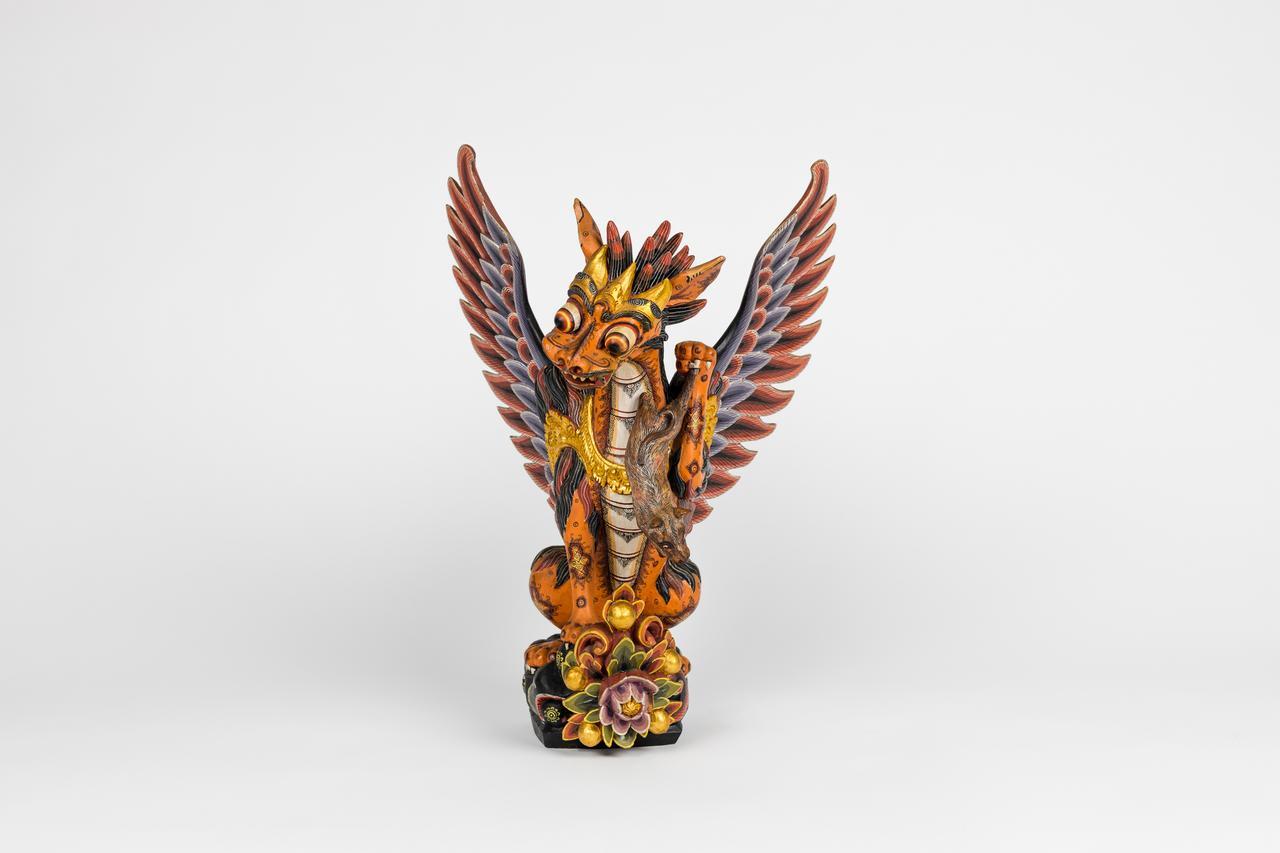
Dance mask - Guatemala - Conquistador

04
days
06
hours
43
minutes
05
seconds
Current bid
€ 2
Reserve price not met
Surya Rutten
Expert
Selected by Surya Rutten

Has over 25 years' experience in Asian art and owned an art gallery.

Estimate  € 150 - € 200
22 other people are watching this object
BEBidder 2670
€2
ITBidder 2805
€1

Catawiki Buyer Protection

Your payment’s safe with us until you receive your object.View details

Trustpilot 4.4 | 130637 reviews

Rated Excellent on Trustpilot.

Description from the seller

Ceremonial Masks of Guatemala

The polychrome wooden masks of Guatemala belong to one of the most fascinating traditions of Mesoamerican ritual art. These objects were not merely decorative artifacts, but performative instruments used in ritual dances and popular dramas, blending Maya Indigenous traditions with Spanish colonial influences.

The use of masks in the region has very ancient roots. Already in pre-Columbian Maya civilizations, masks were employed in religious rituals, sacred ceremonies, and ceremonial dramas: the shaman or priest, wearing a mask, symbolically assumed the identity of a deity or spirit, creating a bridge between the human world and the sacred.

With the Spanish conquest of the 16th century, these traditions did not disappear. On the contrary, they were integrated with European elements, giving rise to popular theatrical performances called “bailes” or “danzas,” staged during religious and patron saint festivals of the communities.

These sacred dramas served both as a community celebration and as a means of evangelization, often organized by local religious confraternities (cofradías).

Danza de la Conquista

One of the most famous popular representations of Guatemala. It tells the Spanish conquest of the Maya kingdom of K’iche’ and the confrontation between the conqueror Pedro de Alvarado and the indigenous hero Tecún Umán.

The main characters wear very distinctive masks:

- Spanish conquistadors with light skin, carved mustaches and beards
- Maya kings and nobles with more stylized features
- Religious figures or messengers

These masks often feature glass eyes and pronounced mustaches, just like in our specimen, to enhance expressiveness during the dance.

Baile de Moros y Cristianos

This dance derives from medieval Spanish theatrical traditions that celebrated the Christians’ victory over the Moors. Brought to America by missionaries, it was adapted to local cultures.

The masks represent soldiers, European nobles, and warriors, with strongly theatrical features: prominent noses, mustaches, arched eyebrows, and vivid colors.

Rabinal Achí

One of the oldest Maya dramas still surviving today, performed annually in the city of Rabinal. The characters are portrayed with elaborate costumes and wooden masks that distinguish the various figures of the historical and mythological narrative.

Traditional masks are generally:

- hand-carved from wood (often cedar or other local species)
- painted with vibrant polychromy
- sometimes enriched with glass eyes, natural hair, or plant fibers
- designed to be viewed from a distance during the dance

The craftsmanship derives from the same artisanal tradition used in colonial religious sculpture: stucco was applied to the wood and then the final polychromy, creating extremely expressive faces.

Spedizione accurata e tracciata

Ceremonial Masks of Guatemala

The polychrome wooden masks of Guatemala belong to one of the most fascinating traditions of Mesoamerican ritual art. These objects were not merely decorative artifacts, but performative instruments used in ritual dances and popular dramas, blending Maya Indigenous traditions with Spanish colonial influences.

The use of masks in the region has very ancient roots. Already in pre-Columbian Maya civilizations, masks were employed in religious rituals, sacred ceremonies, and ceremonial dramas: the shaman or priest, wearing a mask, symbolically assumed the identity of a deity or spirit, creating a bridge between the human world and the sacred.

With the Spanish conquest of the 16th century, these traditions did not disappear. On the contrary, they were integrated with European elements, giving rise to popular theatrical performances called “bailes” or “danzas,” staged during religious and patron saint festivals of the communities.

These sacred dramas served both as a community celebration and as a means of evangelization, often organized by local religious confraternities (cofradías).

Danza de la Conquista

One of the most famous popular representations of Guatemala. It tells the Spanish conquest of the Maya kingdom of K’iche’ and the confrontation between the conqueror Pedro de Alvarado and the indigenous hero Tecún Umán.

The main characters wear very distinctive masks:

- Spanish conquistadors with light skin, carved mustaches and beards
- Maya kings and nobles with more stylized features
- Religious figures or messengers

These masks often feature glass eyes and pronounced mustaches, just like in our specimen, to enhance expressiveness during the dance.

Baile de Moros y Cristianos

This dance derives from medieval Spanish theatrical traditions that celebrated the Christians’ victory over the Moors. Brought to America by missionaries, it was adapted to local cultures.

The masks represent soldiers, European nobles, and warriors, with strongly theatrical features: prominent noses, mustaches, arched eyebrows, and vivid colors.

Rabinal Achí

One of the oldest Maya dramas still surviving today, performed annually in the city of Rabinal. The characters are portrayed with elaborate costumes and wooden masks that distinguish the various figures of the historical and mythological narrative.

Traditional masks are generally:

- hand-carved from wood (often cedar or other local species)
- painted with vibrant polychromy
- sometimes enriched with glass eyes, natural hair, or plant fibers
- designed to be viewed from a distance during the dance

The craftsmanship derives from the same artisanal tradition used in colonial religious sculpture: stucco was applied to the wood and then the final polychromy, creating extremely expressive faces.

Spedizione accurata e tracciata

Details

Era
1400-1900
Number of objects
1
Material
Glass, Wood
Country of origin
Guatemala
Condition
Good condition - used with small signs of aging & blemishes
Height
29 cm
Width
19 cm
Style
Antique
Estimated period
1800-1850
Title additional information
Conquistador
ItalyVerified
116
Objects sold
93.94%
Private

Similar objects

For you in

Southeast Asian, Oceanic & American Art