No. 103552575

No. 103552575
Aparador Art Déco, Michel Dufet para Leandro Martins, 30’s – Brasil
Excepcional aparador Art Déco, diseñado por Michel Dufet para la casa Leandro Martins, hacia 1930. El francés Michel Dufet residió en Río de Janeiro entre 1922 y 1924, donde se trasladó para dirigir la prestigiosa firma de decoración Red Star.
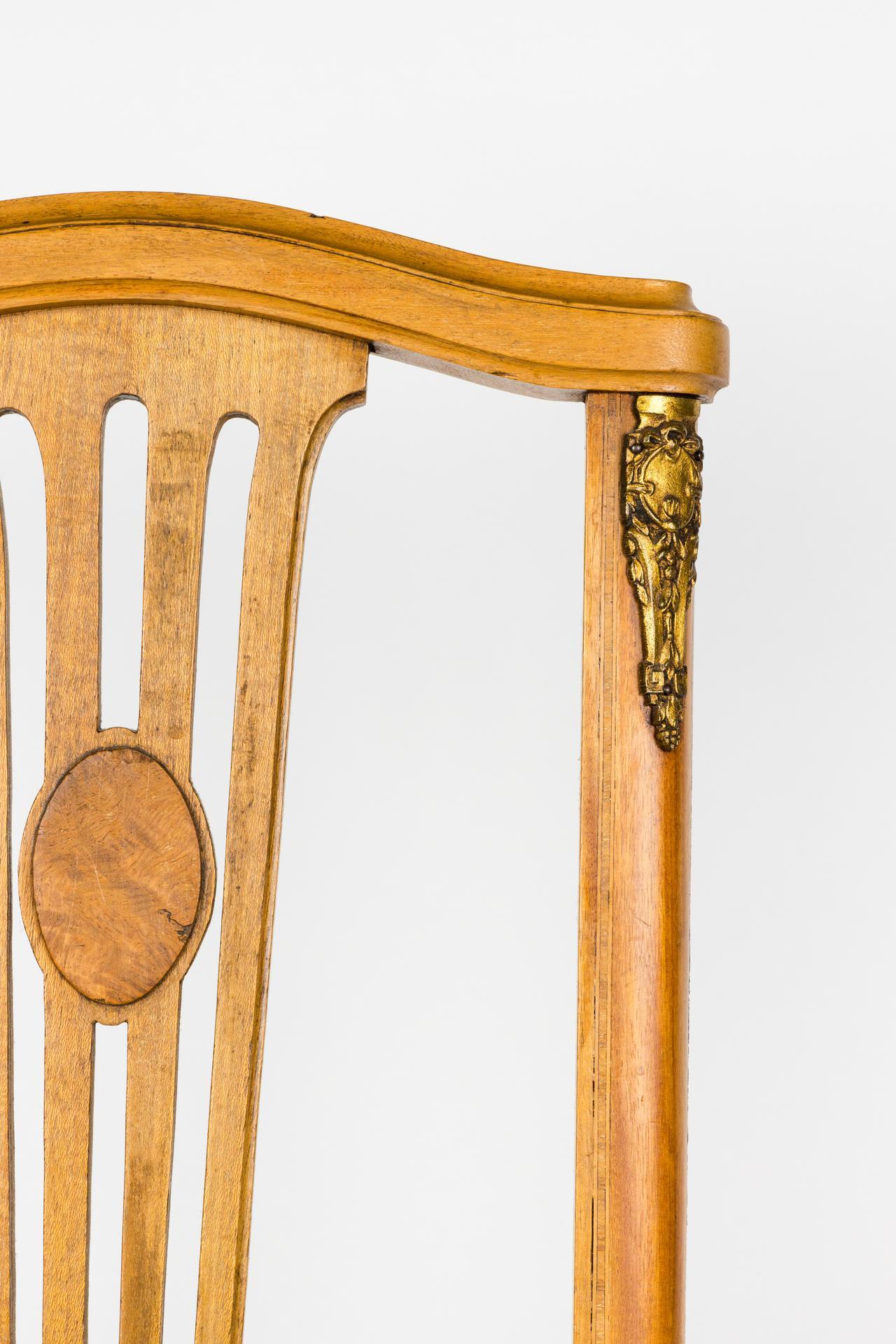
Realizado en madera de nogal, madera de raíz o lupia y dos patas cilíndricas de metal. Estructura de formas geométricas limpias, de composición simétrica y volúmenes equilibrados, se puede hablar incluso de un carácter escultórico en la concepción de la pieza. El frente presenta tres puertas, semiocultas, lo que remite al diseño funcional y la integración discreta del almacenamiento. La central presenta una escena en marquetería que representa un paisaje marítimo con un velero y una estructura portuaria. La técnica de marquetería en tonos contrastantes aporta profundidad y riqueza visual. En la zona superior, un añadido metálico genera el efecto de un cielo despejado e iluminado y crea un llamativo contraste. La combinación de la madera y los detalles metálicos pulidos es una característica del Art Déco especialmente querida por el diseñador. Las patas se asientan sobre una base rectangular de la misma madera que aporta cohesión y una sólida presencia arquitectónica.
Destaca el uso de la madera de lupia o de raíz. Aunque en muchos lugares este tipo de madera de raíz es conocida como lupia o lobanillo, nada tiene que ver con la raíz del árbol, si no con las deformaciones que puede sufrir el tejido a lo largo de todo el tallo. Estas irregularidades que aparecen en la madera han sido objeto de interés en ebanistería y se han convertido en una parte muy cotizada por su indudable valor, ya que son maderas extremadamente densas y resistentes. Además, las formas caprichosas que se dibujan en su superficie han dado lugar a un gran aprecio por este material, provocaban un gran interés dentro de corrientes como el Art Decó, pues ansiaban contar con esta madera tan peculiar y dotada de una belleza única.
Estampillado «Leandro Martins & cia» en la zona posterior. La pieza aparece reproducida en VV.AA., «A casa Art Déco Carioca», Espaço cultural Península, Río de Janeiro, Brasil, 2006-2007, pp. 36-37. (Se adjunta imagen).
Michel Dufet (1888-1985)
Michel Dufet fue un arquitecto, diseñador de interiores y teórico francés destacado en el ámbito del diseño y la decoración durante la primera mitad del siglo XX. Su estilo estuvo influenciado por el movimiento Art Déco y el modernismo, creando diseños que combinan funcionalidad y estética. Diseñó muebles, espacios comerciales y residenciales, así como interiores de barcos y trenes, lo que influyó en su estilo de mobiliario. Sus piezas a menudo tenían un carácter aerodinámico, con superficies pulidas y detalles que recordaban la estética de los grandes transatlánticos.
Aunque promovió la modernización del diseño, su enfoque seguía dependiendo de la artesanía de alta calidad. No buscó la producción masiva, sino un equilibrio entre la innovación y la exclusividad.
Sus creaciones destacan por el uso de materiales de lujo y de alta calidad, líneas geométricas y una integración armoniosa entre los objetos y la arquitectura interior. Sus piezas solían combinar maderas preciosas con metales pulidos y detalles en marfil o laca. También experimentó con vidrios opacos y materiales modernos para la época. Fue director artístico de la empresa Établissements D.I.M. (Décoration Intérieure Moderne), donde promovió el diseño de interiores modernos.
En 1947 se casó con la hija del escultor francés Antoine Bourdelle (Rhodia Dufet-Bourdelle) y, a partir de 1950, dedicó la mayor parte de su tiempo a conservar el legado y las obras de su suegro. En 1972, Dufet se convirtió en conservador del Museo Bourdelle, retirándose finalmente antes de su muerte en 1985. Precisamente en este museo se encuentra actualmente una colección dedicada a las obras del diseñador, “The Rodhia and Michel Dufet collection”. La Colección Dufet llegó al Musée Bourdelle en 2002. Incluye 34 muebles creados por el interiorista Michel Dufet de 1910 a 1950, así como una colección privada. Estos reflejan el papel esencial que Dufet jugó junto a su esposa Rhodia en la definición del programa y publicaciones del Musée Bourdelles.
Leandro Martins (Río de Janeiro, 1885)
Casa Leandro Martins Moveis SA, más conocida como Casa Leandro Martins, fue una fábrica brasileña de muebles creada por Leandro Augusto Martins, de origen portugués. Se convirtió en el mejor fabricante de muebles y tapices de Río de Janeiro, con innegable maestría, buen gusto y solidez. Sus productos eran conocidos por ser elegantes, cómodos, duraderos, con acabados perfectos y una garantía absoluta para el comprador. La fábrica produjo muebles de lujo y tapices hasta la década de 1960. A día de hoy, es un anticuario referente.
El envío del producto será pagado por el comprador de acuerdo con las dimensiones, peso y destino. Nos pondremos en contacto contigo para gestionarlo y acordar el presupuesto. En los gastos de envío se incluye el embalaje profesional hecho a medida; y el envío personalizado, con número de seguimiento y garantía. DEBIDO A LAS DIMENSIONES DE LA PIEZA, SE PREFIERE ACORDAR EL ENVÍO CON EL COMPRADOR.
El comprador será responsable de pagar los derechos de importación y los impuestos asociados en el país de destino, si los hubiera. Tenga en cuenta la exención de responsabilidad del vendedor con respecto a posibles cargos aduaneros, ya que se cobran en el país de destino y el importe a pagar lo determina la aduana de ese país.
Si fuese necesario pedir un permiso de exportación, los gastos corren a cargo del comprador. El coste depende progresivamente del valor de la obra a exportar.
How to buy on Catawiki
1. Discover something special
2. Place the top bid
3. Make a secure payment