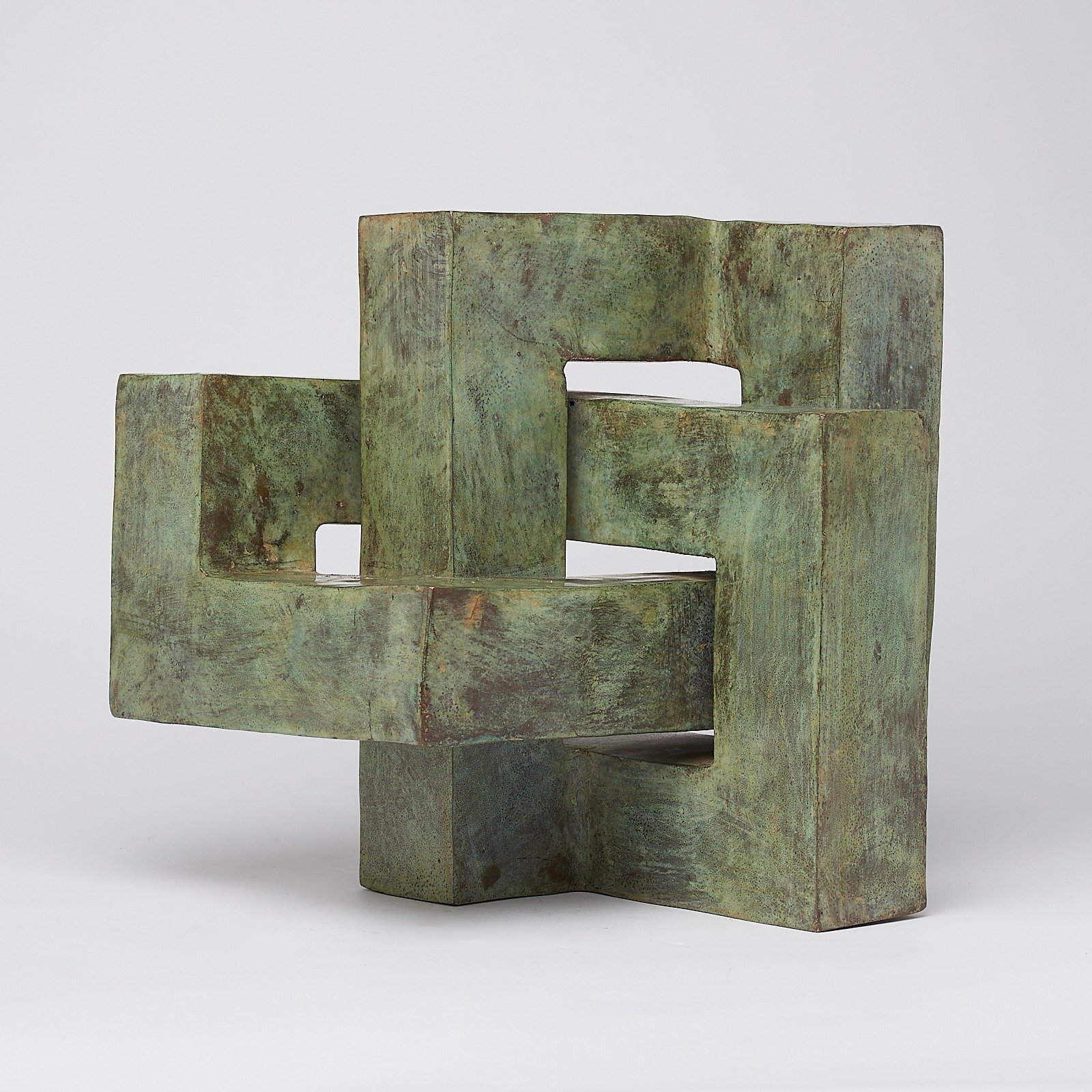
Ernest Patris - Candleholder - Ceramic - Handcrafted Studio


Catawiki Buyer Protection
Your payment’s safe with us until you receive your object.View details
Trustpilot 4.4 | 136208 reviews
Rated Excellent on Trustpilot.
Ceramic sculpture by Ernest Patris, made in Belgium (Marchienne-au-Pont), dating to 1950–1960, measuring 44 cm high by 17 cm wide by 44 cm deep, and in good condition with minor signs of aging.
Description from the seller
This expressive ceramic piece was created by Belgian artist Ernest Patris (1909–1981), a renowned sculptor, ceramist, and expressionist painter. Born in Beuzet, Patris developed his artistic skills largely through self-teaching, discovering the techniques of clay modeling on his own and producing his first works around 1930.
A decisive moment in his career came when he received encouragement from the celebrated Belgian expressionist and surrealist painter James Ensor. Inspired by Ensor’s support, Patris left his regular employment in 1937 to devote himself entirely to sculpture. He later refined his technical expertise through studies in bronze casting at the Professional School of Gilly and anatomy at the Academy of Ghent.
In 1952, Patris established his ceramic workshop in Marchienne-au-Pont, where he developed a distinctive artistic language characterized by organic forms, rich textures, and a raw, sculptural aesthetic. His ceramics often highlight the natural qualities of clay and may feature unique patinated finishes reminiscent of bronze or aged metal.
While Ernest Patris is widely recognized for his portraits, busts, and public monuments, his ceramic works are equally admired for their expressive character and strong connection to the Expressionist tradition. This piece exemplifies his mastery of form, texture, and material, making it a notable example of mid-20th-century Belgian ceramic art.
This expressive ceramic piece was created by Belgian artist Ernest Patris (1909–1981), a renowned sculptor, ceramist, and expressionist painter. Born in Beuzet, Patris developed his artistic skills largely through self-teaching, discovering the techniques of clay modeling on his own and producing his first works around 1930.
A decisive moment in his career came when he received encouragement from the celebrated Belgian expressionist and surrealist painter James Ensor. Inspired by Ensor’s support, Patris left his regular employment in 1937 to devote himself entirely to sculpture. He later refined his technical expertise through studies in bronze casting at the Professional School of Gilly and anatomy at the Academy of Ghent.
In 1952, Patris established his ceramic workshop in Marchienne-au-Pont, where he developed a distinctive artistic language characterized by organic forms, rich textures, and a raw, sculptural aesthetic. His ceramics often highlight the natural qualities of clay and may feature unique patinated finishes reminiscent of bronze or aged metal.
While Ernest Patris is widely recognized for his portraits, busts, and public monuments, his ceramic works are equally admired for their expressive character and strong connection to the Expressionist tradition. This piece exemplifies his mastery of form, texture, and material, making it a notable example of mid-20th-century Belgian ceramic art.