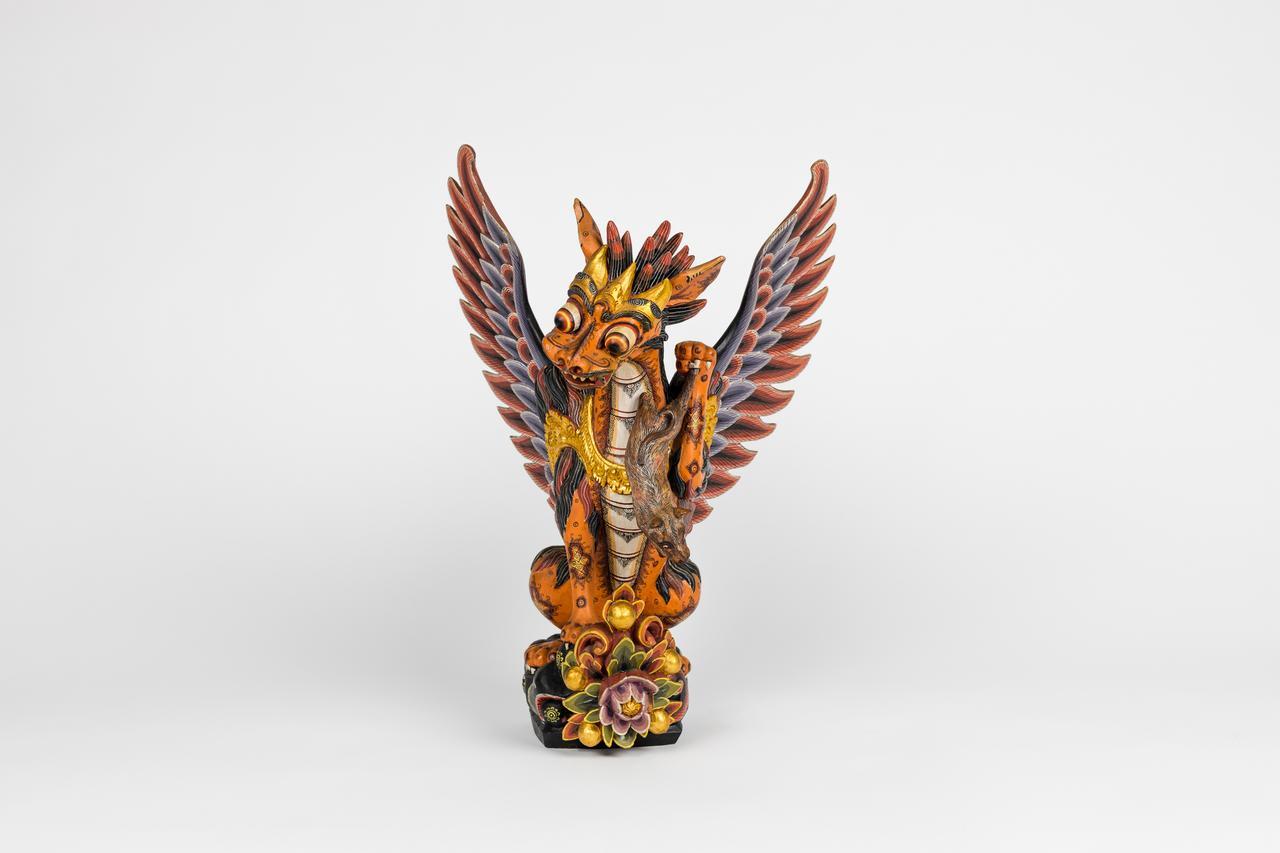
Decorative ornament - Peru - Moche Priest (Peru)


Catawiki Buyer Protection
Your payment’s safe with us until you receive your object.View details
Trustpilot 4.4 | 136828 reviews
Rated Excellent on Trustpilot.
Terracotta figure from Peru, a modern reinterpretation of Moche iconography, seated with an elaborate headdress and ritual chest details, possibly intended as a ceremonial flute, in excellent condition; 30 cm high, 17 cm wide, 12 cm deep, 300 g, origin Peru (Lima), antique-inspired style, dated 2000–2010.
Description from the seller
This terracotta figure, made in the 1970s, is a modern reinterpretation inspired by the iconography of the Moche culture. With its seated posture, elaborate headdress, and ritual details on the chest, it evokes the presence of a ceremonial character: an intermediary between the human and the divine. Although it is not an original pre-Columbian piece, its artisanal and symbolic quality makes it a highly evocative and decorative object, perfect for collectors and lovers of Andean traditions.
The back of the figure shows three aligned perforations, which suggests the possibility that this piece, in addition to its decorative function, could have been used as a ceremonial flute. Regarding the face, its almond-shaped eyes stand out, the headdress adorned with a solar symbol, and the carved ear ornaments. The details on the chest, with curved motifs, reinforce its ritual aura. These adornments and its serene expression make it a piece that dialogues with the sacred and the everyday.
The Moche culture was one of the most prominent civilizations along the northern coast of Peru, developing roughly between 100 and 700 CE. Its cities, such as Moche and Sipán, rose with monumental adobe pyramids. Moche ceramics are famous for their huacos (vessels) of high quality, with realistic figures that depict scenes of daily life, rituals, and mythical characters. The Moche developed a complex social organization, with a sacerdotal elite and warriors, and their art, both in ceramics and in metal, captured beliefs about fertility, war, and the connection to the divine. Their legacy is a vibrant testament to the rich cultural heritage of ancient Peru.
This terracotta figure, made in the 1970s, is a modern reinterpretation inspired by the iconography of the Moche culture. With its seated posture, elaborate headdress, and ritual details on the chest, it evokes the presence of a ceremonial character: an intermediary between the human and the divine. Although it is not an original pre-Columbian piece, its artisanal and symbolic quality makes it a highly evocative and decorative object, perfect for collectors and lovers of Andean traditions.
The back of the figure shows three aligned perforations, which suggests the possibility that this piece, in addition to its decorative function, could have been used as a ceremonial flute. Regarding the face, its almond-shaped eyes stand out, the headdress adorned with a solar symbol, and the carved ear ornaments. The details on the chest, with curved motifs, reinforce its ritual aura. These adornments and its serene expression make it a piece that dialogues with the sacred and the everyday.
The Moche culture was one of the most prominent civilizations along the northern coast of Peru, developing roughly between 100 and 700 CE. Its cities, such as Moche and Sipán, rose with monumental adobe pyramids. Moche ceramics are famous for their huacos (vessels) of high quality, with realistic figures that depict scenes of daily life, rituals, and mythical characters. The Moche developed a complex social organization, with a sacerdotal elite and warriors, and their art, both in ceramics and in metal, captured beliefs about fertility, war, and the connection to the divine. Their legacy is a vibrant testament to the rich cultural heritage of ancient Peru.