No. 99840043

Sold
Table knife - CD-RW636 - Olive - Usuba Japanese knife
Final bid
€ 1
5 weeks ago

Table knife - CD-RW636 - Olive - Usuba Japanese knife

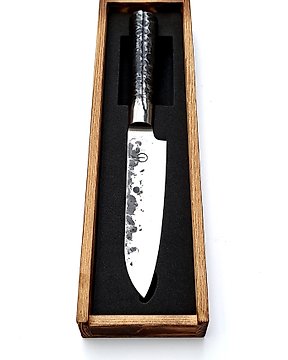
Name: Japanese Knife (likely a Nakiri or Usuba): The knife’s straight, rectangular blade and its particular shape suggest that it could be a Nakiri or Usuba knife, which are traditional Japanese knives used for vegetable preparation. Description: Blade: The blade has a rustic, somewhat hammered texture, typical of high-carbon steel knives, often used in Japanese craftsmanship. It looks like it’s been forged by hand, with a pattern that might provide both aesthetic appeal and strength. Handle: The handle is made of wood, likely a traditional hardwood like walnut or rosewood, and is ergonomically designed to provide a comfortable grip. Size: The knife appears to have a long, broad blade, which is typical for the Nakiri or Usuba knives used for cutting vegetables. The size of the blade is medium to large, making it ideal for chopping, slicing, and dicing vegetables. Shape: The blade has a squared-off tip, and the edge is relatively straight. This type of blade is designed to make precise cuts, especially for vegetables, with a straight chopping motion. Usage: Primary Use: This knife is most commonly used in preparing vegetables. Its flat blade helps with straight, clean cuts and is ideal for chopping, slicing, and dicing. The design makes it particularly good for cutting through leafy greens, carrots, cucumbers, and other vegetables without much rocking motion. Additional Use: Although traditionally a vegetable knife, it can also be used for delicate tasks, such as fine slicing of fish or meat, though it's not as versatile for those tasks as a general-purpose chef's knife. Precautions: Sharpening: High-carbon steel blades, like the one in this knife, need to be sharpened regularly to maintain their edge. You should use a whetstone or take it to a professional sharpener to preserve the quality of the blade. Cleaning: Hand wash only with warm water and mild soap. Avoid using the dishwasher as it can damage the wooden handle and dull the blade. Dry immediately after washing to prevent rust. Storage: To prevent the blade from dulling or being damaged, store the knife on a magnetic strip or in a knife block. Avoid leaving it loose in a drawer where it could get scratched or damaged. Rust Prevention: As with most high-carbon steel knives, this knife may be prone to rust if not cared for properly. Make sure to dry the blade after use and occasionally oil it to protect the metal from moisture.

No. 99840043

Sold
Table knife - CD-RW636 - Olive - Usuba Japanese knife

Table knife - CD-RW636 - Olive - Usuba Japanese knife

Name:
Japanese Knife (likely a Nakiri or Usuba): The knife’s straight, rectangular blade and its particular shape suggest that it could be a Nakiri or Usuba knife, which are traditional Japanese knives used for vegetable preparation.

Description:

Blade: The blade has a rustic, somewhat hammered texture, typical of high-carbon steel knives, often used in Japanese craftsmanship. It looks like it’s been forged by hand, with a pattern that might provide both aesthetic appeal and strength.

Handle: The handle is made of wood, likely a traditional hardwood like walnut or rosewood, and is ergonomically designed to provide a comfortable grip.

Size:

The knife appears to have a long, broad blade, which is typical for the Nakiri or Usuba knives used for cutting vegetables. The size of the blade is medium to large, making it ideal for chopping, slicing, and dicing vegetables.

Shape:

The blade has a squared-off tip, and the edge is relatively straight. This type of blade is designed to make precise cuts, especially for vegetables, with a straight chopping motion.

Usage:

Primary Use: This knife is most commonly used in preparing vegetables. Its flat blade helps with straight, clean cuts and is ideal for chopping, slicing, and dicing. The design makes it particularly good for cutting through leafy greens, carrots, cucumbers, and other vegetables without much rocking motion.

Additional Use: Although traditionally a vegetable knife, it can also be used for delicate tasks, such as fine slicing of fish or meat, though it's not as versatile for those tasks as a general-purpose chef's knife.

Precautions:

Sharpening: High-carbon steel blades, like the one in this knife, need to be sharpened regularly to maintain their edge. You should use a whetstone or take it to a professional sharpener to preserve the quality of the blade.

Cleaning: Hand wash only with warm water and mild soap. Avoid using the dishwasher as it can damage the wooden handle and dull the blade. Dry immediately after washing to prevent rust.

Storage: To prevent the blade from dulling or being damaged, store the knife on a magnetic strip or in a knife block. Avoid leaving it loose in a drawer where it could get scratched or damaged.

Rust Prevention: As with most high-carbon steel knives, this knife may be prone to rust if not cared for properly. Make sure to dry the blade after use and occasionally oil it to protect the metal from moisture.

Final bid
€ 1
Ger van Oers
Expert
Estimate  € 80 - € 110

Similar objects

For you in

Cooking & Dining

Set a search alert
Set a search alert to get notified when new matches are available.

This object was featured in


How to buy on Catawiki

Learn more about our Buyer Protection

      1. Discover something special

      Browse through thousands of special objects selected by experts. View the photos, details and estimated value of each special object. 

      2. Place the top bid

      Find something you love and place the top bid. You can follow the auction to the end or let our system do the bidding for you. All you have to do is set a bid for the maximum amount you want to pay. 

      3. Make a secure payment

      Pay for your special object and we’ll keep your payment secure until it arrives safe and sound. We use a trusted payment system to handle all transactions. 

Have something similar to sell?

Whether you're new to online auctions or sell professionally, we can help you earn more for your special objects.

Sell your object