Nr. 105196244

Niet meer beschikbaar
Thracië, Ainos Tetradrachm Circa 415/4-413/2 BC
Bieden gesloten
2 dagen geleden

Thracië, Ainos Tetradrachm Circa 415/4-413/2 BC

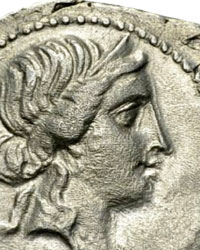
THRACE, Ainos. Circa 415/4-413/2 BC. AR Tetradrachm. Head of Hermes right, wearing petasos / Goat standing right; ivy branch to right; all within incuse square. Ainos came rather late to currency production, striking its first tetradrachms only after the expulsion of the Persians from northern Greece following Xerxes’ defeat at Salamis. Its first period ended with the Athenian coinage decree of 449 BC, but the mint was in operation again by circa 435 BC, tapering off rapidly until disappearing with the conquest of the city by Philip of Macedon in 342 BC. Its uniform types throughout its history were Hermes and the goat, the latter the symbol of the pasture land that provided what prosperity Ainos had. Hermes was the patron deity of Ainos, dating from the time of the Trojan War. According to a poem by Kallimachos, the sculptor Epeios, who constructed the Trojan Horse, also made a wooden statue (ξοανον) of Hermes, which was washed out to sea and recovered by fishermen by the Hebros river. The fishermen, thinking it just a piece of driftwood, tried to burn it in their bonfire. When it failed to burn they took fright and threw it back into the sea, which promptly cast it back again. The natives accepted it as a relic of the gods, and erected the sanctuary of Hermes Perpheraios (the Wanderer) at the future site of Ainos. The later coins of Ainos, with their splendid facing head of Hermes, showcase some of the finest numismatic art of the Greek world. Nevertheless, Ainos never became an important city or trading center. The climate might have had something to do with it; according to Athaneus, Ainos had two seasons, eight months of cold and four months of winter. At least the goats liked it. Weight: 16,55 gr Diameter: 25,2 mm Condition: Very Fine

Nr. 105196244

Niet meer beschikbaar
Thracië, Ainos Tetradrachm Circa 415/4-413/2 BC

Thracië, Ainos Tetradrachm Circa 415/4-413/2 BC

THRACE, Ainos. Circa 415/4-413/2 BC. AR Tetradrachm. Head of Hermes right, wearing petasos / Goat standing right; ivy branch to right; all within incuse square.
Ainos came rather late to currency production, striking its first tetradrachms only after the expulsion of the Persians from northern Greece following Xerxes’ defeat at Salamis. Its first period ended with the Athenian coinage decree of 449 BC, but the mint was in operation again by circa 435 BC, tapering off rapidly until disappearing with the conquest of the city by Philip of Macedon in 342 BC. Its uniform types throughout its history were Hermes and the goat, the latter the symbol of the pasture land that provided what prosperity Ainos had. Hermes was the patron deity of Ainos, dating from the time of the Trojan War. According to a poem by Kallimachos, the sculptor Epeios, who constructed the Trojan Horse, also made a wooden statue (ξοανον) of Hermes, which was washed out to sea and recovered by fishermen by the Hebros river. The fishermen, thinking it just a piece of driftwood, tried to burn it in their bonfire. When it failed to burn they took fright and threw it back into the sea, which promptly cast it back again. The natives accepted it as a relic of the gods, and erected the sanctuary of Hermes Perpheraios (the Wanderer) at the future site of Ainos. The later coins of Ainos, with their splendid facing head of Hermes, showcase some of the finest numismatic art of the Greek world. Nevertheless, Ainos never became an important city or trading center. The climate might have had something to do with it; according to Athaneus, Ainos had two seasons, eight months of cold and four months of winter. At least the goats liked it.

Weight: 16,55 gr
Diameter: 25,2 mm

Condition: Very Fine

Bieden gesloten
Carmen Vera Gutiérrez
Expert
Geschatte waarde  € 3.900 - € 4.300

Vergelijkbare objecten

Voor jou in

Antieke munten

Stel een zoekopdracht in
Stel een zoekopdracht in om een melding te ontvangen wanneer er nieuwe resultaten zijn.

Dit object was te vinden in


Zo koop je op Catawiki

Meer informatie over onze Kopersbescherming

      1. Ontdek iets bijzonders

      Verken duizenden bijzondere objecten die door experts zijn geselecteerd. Bekijk de foto's, de details en de geschatte waarde van elk bijzonder object. 

      2. Plaats het hoogste bod

      Vind iets waar je van houdt en plaats het hoogste bod. Je kunt de veiling volgen tot het einde of je kunt ons systeem voor je laten bieden. Het enige dat je hoeft te doen, is het maximale bedrag instellen dat je wilt betalen. 

      3. Veilig betalen

      Betaal voor je bijzondere object en we houden de betaling veilig totdat je nieuwe aanwinst veilig is bezorgd. We gebruiken een vertrouwd betalingssysteem om alle transacties af te handelen. 

Wil je iets vergelijkbaars verkopen?

Of je nu nieuw bent met online veilingen of professioneel verkoopt, wij kunnen je helpen meer te verdienen met je bijzondere objecten.

Verkoop je object